Organisations, Policies and Exhibition Spaces

Today I have been reflecting upon my professional practice in regards to organisations and polices which support my practice as a Graphic Designer, as well as looking at various exhibition spaces whereby I can show my work and further promote myself also.

I have always found it very important to self-promote, and by doing so across a range of platforms (website, portfolio, networking events, social media) I have built up a client base surrounding my freelance practice, however, over the duration of the course I would really like to use this opportunity to engage more with local organisations as well, in addition to collaborating with interdisciplinary artists to encourage and share new ideas with new audiences. I have already been in conversation with several fellow MA students about potential collaborations in the future – Bobbi Rae, Harriet Spowage and Scarlett Carson. Each has a very different practice, however through conversations with them to date have already established various common interests or links between disciplines we would like to explore. I feel this would really be a new and exciting challenge as working as a freelance Graphic Designer is quite an isolating practice unless working on a photoshoot, for example.

I have noted a list of possible Exhibition Spaces below which are in the local Leeds area which I would like to look more into at appropriate times throughout my MA studies.

I am also signed up to newsletters about such venues so I am also aware of upcoming events and exhibitions, allowing for meeting further interdisciplinary contact and collaboration too.

  • The Gallery at Munro House
  • Lady Beck Studios and Project Space
  • The Brunswick
  • The Old Red Bus Station
  • The Bowery
  • Sunny Bank Mills
  • &Model Gallery
  • HEART
  • Leeds College of Art Exhibition Spaces
  • Belgrave Art Fairs

I have always been aware of the Exhibition Spaces in Leeds due to living here several years and attending many events, however, due to the nature of working in studios and agencies for several years, and then now freelancing within an Industry which is going more digital, I have found digital galleries a much better place to curate my work, brand and promote myself, whilst showcasing my work. I have found this to reach a larger audience, working with clients all over the world (Sydney, Saudi Arabia, LA, New York, Florida, Las Vegas, Kuwait, for example) and due to the international nature of fashion and beauty trends have found this to be personally much more effective to my freelance practice. However, I would like to try using ‘real life’ exhibition spaces to see how this can not only advance my professional practice, but to also showcase with a new and intimate audience.

  • Instagram
  • Behance
  • Twitter
  • Personal Website
  • Blog
  • Adobe Portfolio
  • The Dots
  • Big Cartel Shop

The following organisations are local, national and international, and are relevant to my practice as a Graphic Designer regardless of working within Fashion and Beauty Industries. Each in it’s own right has its own policies, regulations and rules per say which allow for fair competitions, equal rights within advertising and industry standard design training to take place. Even though not all of the below are relevant to my practice at this moment in time, nor am I always active in competitions for example, but I am always aware of what is happening incase a viable opportunity of interest arises, such as the D&AD Exhibitions and Fashion-related Competitions. I have also worked inline with some of the policies of Clear Channel whilst working with previous employers, ensuring that advertising is fair, contains the correct terms and conditions and also that the content complies with national and international standards further ensuring fair practice.

  • D&AD
  • YCN
  • ISTD
  • International Design Awards
  • Clear Channel
  • Penguin Posse
  • AIGA
  • ioc-D
  • Design Council
  • Creative Guild

In addition, I have also found that there are various magazines and websites which I find very relevant to my practice of Graphic Design, as well as within the context of the industries I work within, Beauty and Fashion.

  • Grafik
  • AdWeek
  • i-D
  • Debut Magazine
  • Drapers
  • The Business of Fashion
  • WGSN

I find the above much more useful at times than the organisations listed above as they apply specifically to my professional context, and also showcase other practitioners on an International level, whilst also allowing myself to be constantly aware of the newest technologies within the industries, ‘hot topics’ within advertising campaigns, career prospects and vacancies, as well as press releases and articles about industry collaborations, product launches, trends and advances for example.

Furthermore, based on my research question I am aware of other policies surrounding issues such as model welfare, social responsibilities, government regulations and awareness strategies. I am hoping over the next few months through further research and talking to my connections (ASOS for example) about these topics, I can understand how they fit in with Graphic Design, Fashion and Beauty and how this could potentially be applied to my own professional practice, by constructing a set of my own personal guidelines based on my ethics and beliefs.

  • ASOS Model Welfare Policy/Social Responsibility
  • Model Alliance
  • British Fashion Council
  • B-EAT
  • EDAW – Eating Disorder Awareness Week
  • UK All Party Parliamentary Group on Body Image (APPG)
  • Government Equalities Unit
  • Equalities Ministers Advisory Group
  • Clients – do they have any policies in place?

The issue of clients and policies is sometimes an issue within my practice, often with start-up businesses or small/local/national brands using in my opinion, models whom are too thin, showcasing their collections, and have often found that in comparison to ASOS many haven’t considered such topics/issues. I do think sometimes this can push the boundaries of what I am comfortable and not comfortable working with, however feel that it is interesting when comparing to international brands such as ASOS in regards to how regimented they are and to if a brand or not has policies set in place.

This itself can be a controversial topic, as start up brands often do not want to limit themselves or their audience, nor want to be seen to have too many rules and regulations making them ‘awkward’ to work with as this can stipulate the people they can access or book for instance (models and photographers) or could challenge opinions, due to having a pre-determined style, even if a healthy one. For myself however, it can be a hard decision to make as a fairly new freelancer as to whether I would set up my own policies now due to the need to build a client base, and not wanting to ‘scare’ anyone away with a bullet pointed list of do’s and don’ts. Therefore, I would like to potentially test this idea if at all possible, and research into more brands whom have policies to see how they work, and if they are effective for the business but also if it benefits the end user.

BBC Documentary – Britain’s Secrets with Anne Robinson: Body Image

This is working towards objective 1.

screen-shot-2016-10-20-at-21-43-26

Image Source

Programme Description:

First shown, 8pm, Thurs 20th October 2016.

“Anne Robinson looks good for a woman of 72, but she works hard at it. She’s been on a diet for most of her life, has had a facelift, goes on an expensive biannual detox, exercises nearly every day, has her hair done once a week and spends lots of money on her clothes.

But aren’t younger generations under even more pressure to look good than ever before? She meets the make-up addicts who spend more time getting ready for a night out than on the night itself, a couple of gym obsessives in pursuit of Instagram followers and a young man going under the knife in the hope that he will be ‘perfect’ one day.

Anne wants to know why we’re all so obsessed with our appearance and what’s wrong with being ugly anyway? As a counterpoint to those who are obsessed with their looks she meets some people who very definitely aren’t – from the naturists who let it all hang out, to the young comedian speaking out against body shaming, to outspoken actress Miriam Margolyes who tries to coax Anne to eat more than a lettuce leaf over lunch. Anne also dons a niquab for a day to experience the rare feeling of what it’s like to not be judged on her looks at all.

She also gives two men the chance to delve into each other’s grooming routines. Alex hides his insecurities by wearing up to ten beauty products at a time, while Danny’s idea of grooming is washing his face with water and brushing his teeth. What can they learn from their very different approaches to maintaining their appearance?”

My Notes:
Couple 1 (Lanon and Millie)

screen-shot-2016-10-21-at-23-19-53

screen-shot-2016-10-21-at-23-23-15

screen-shot-2016-10-21-at-23-20-26
Image Source

  • Lanon, 22, Personal Trainer
  • Millie, 20, Aspiring Fitness Model
  • Below shows several short transcriptions which I found particularly interesting and resonated with in regards to the influence which social media has upon this particular couple. I found it very interesting also that it was more so the male, Lanon, whom seemed to care more about his image, highlighting a rise in male interests in their looks and self awareness. The amount of control involved in their diets, exercise routines and lifestyles is evidenced heavily the in the documentary, and shows the input required to gain ‘likes’ on Instagram.
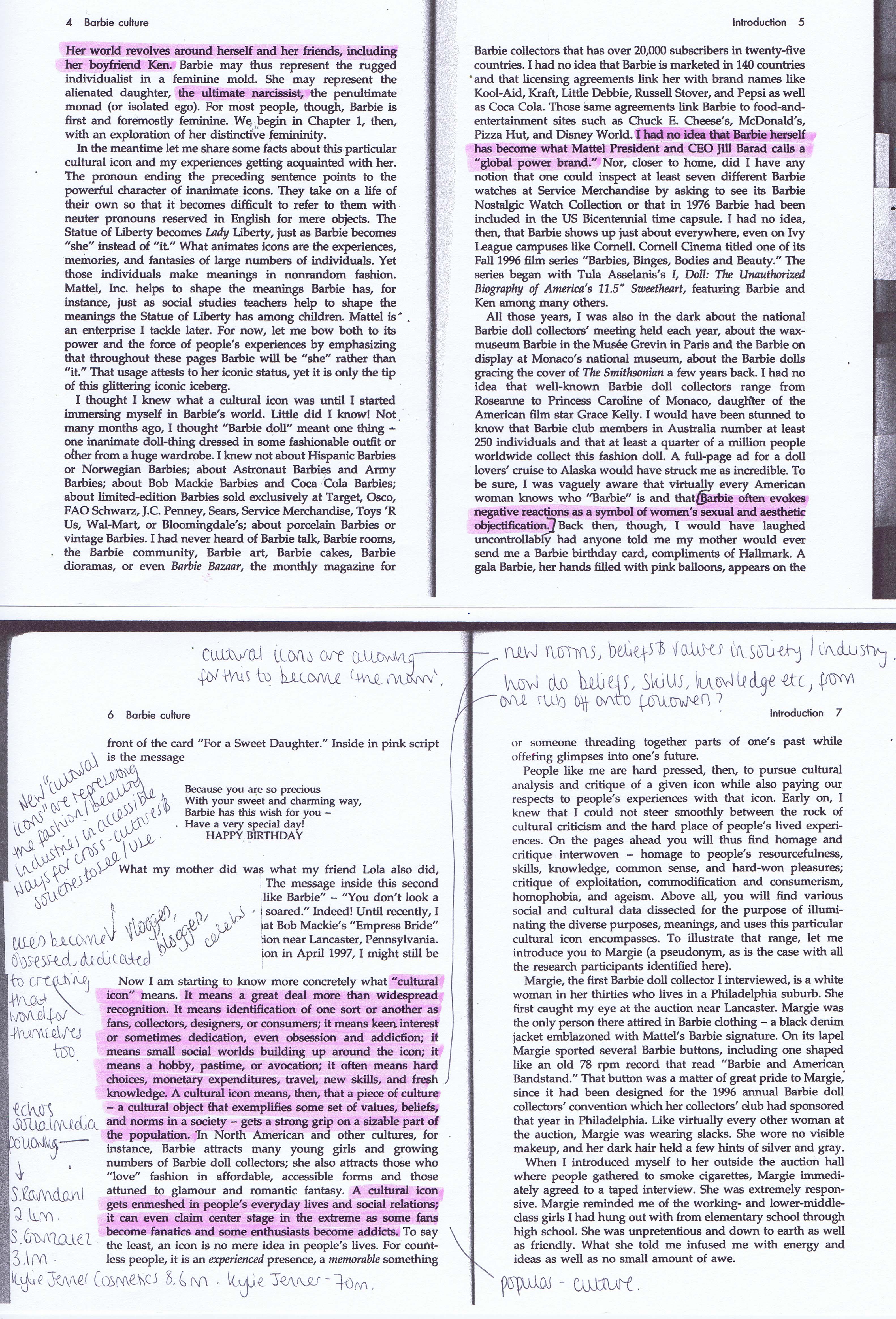
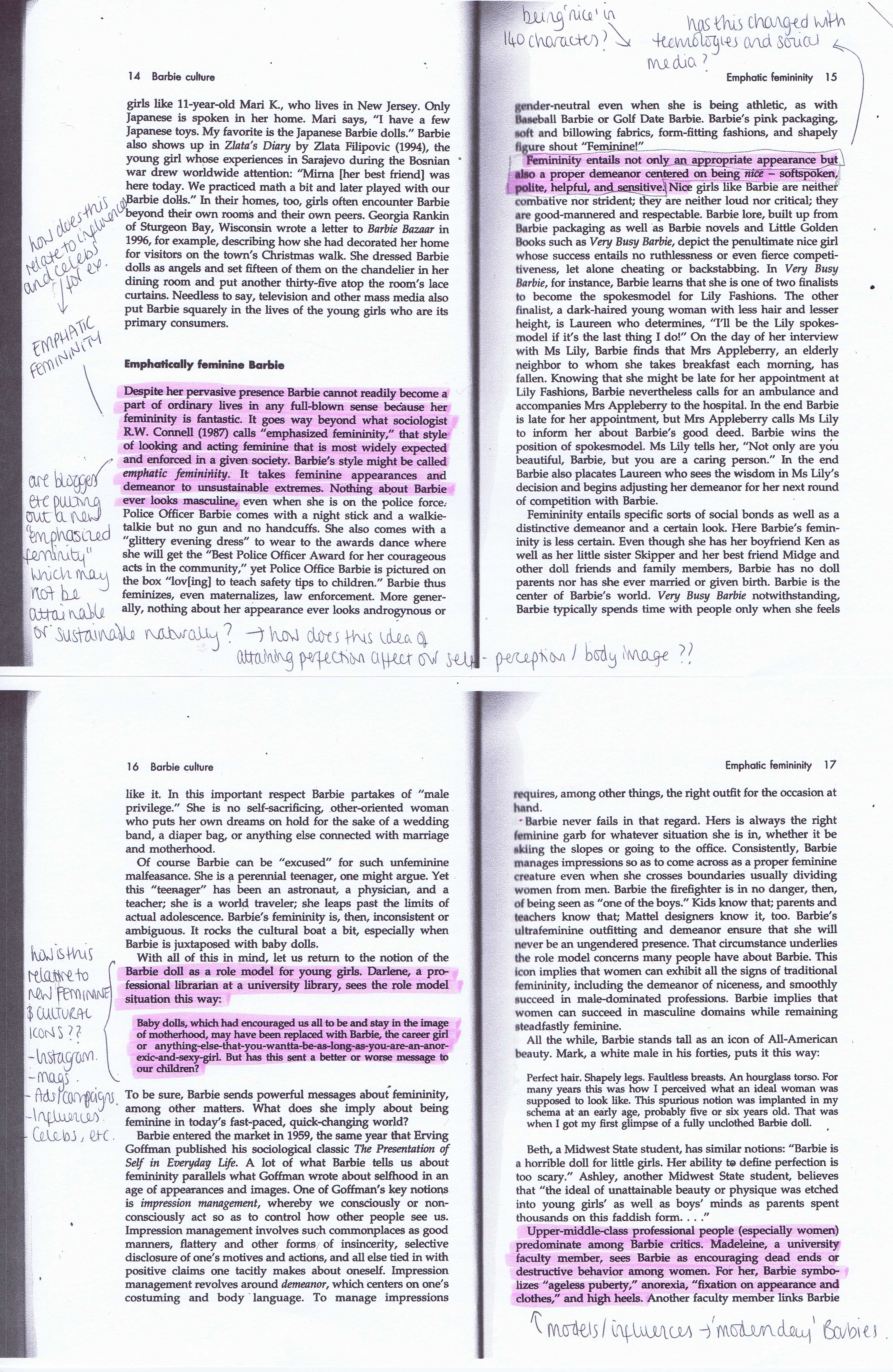
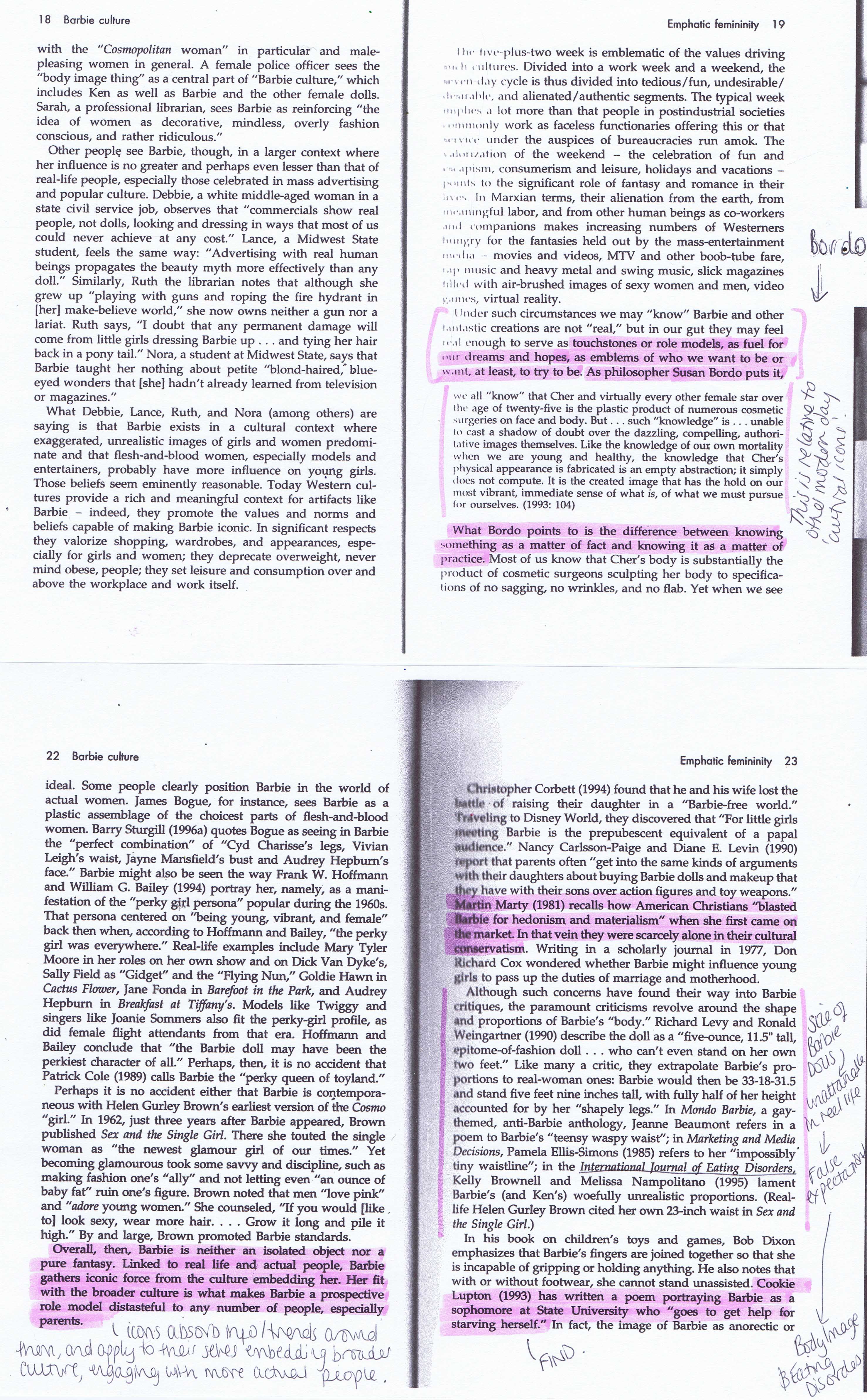
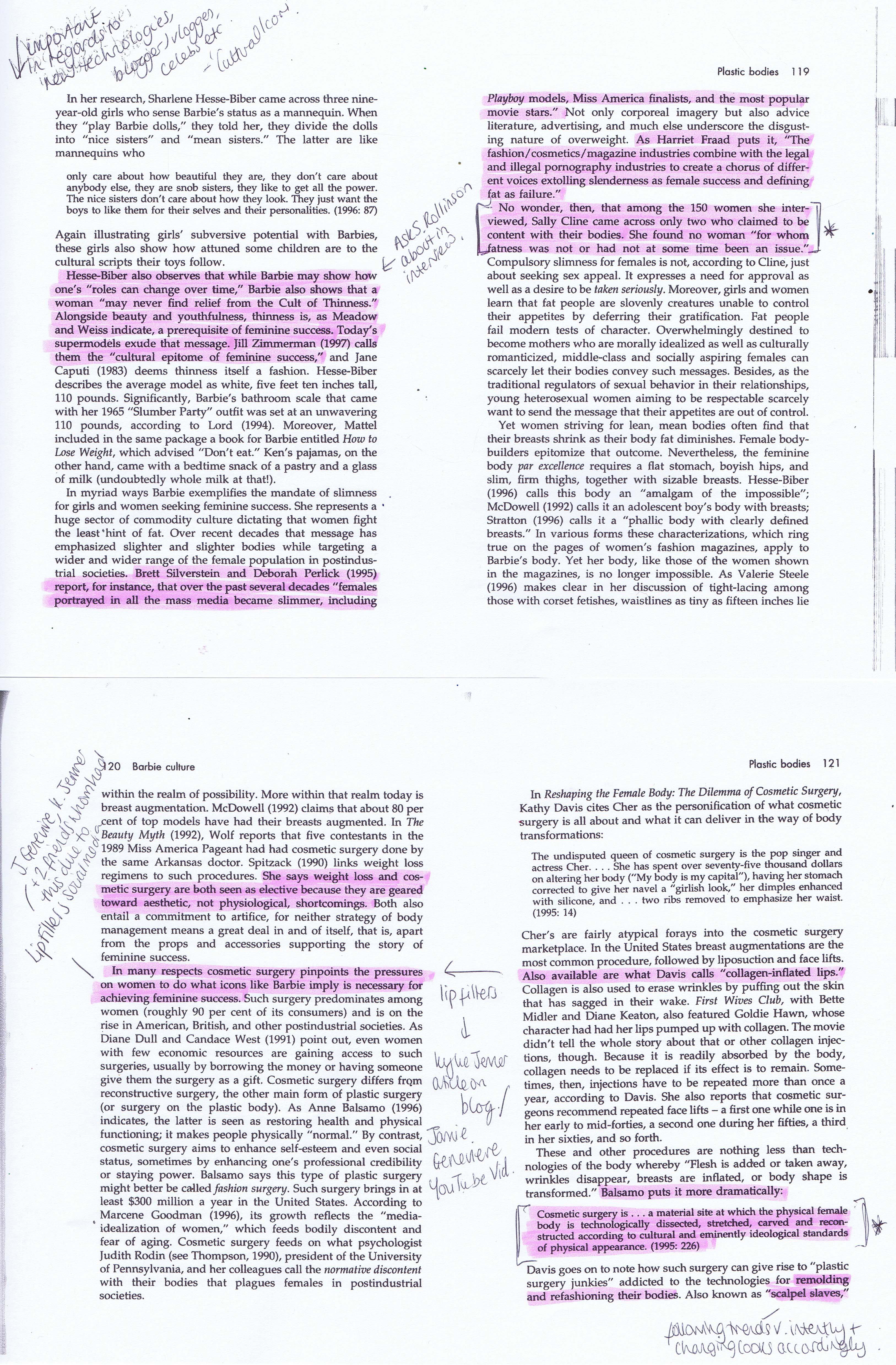
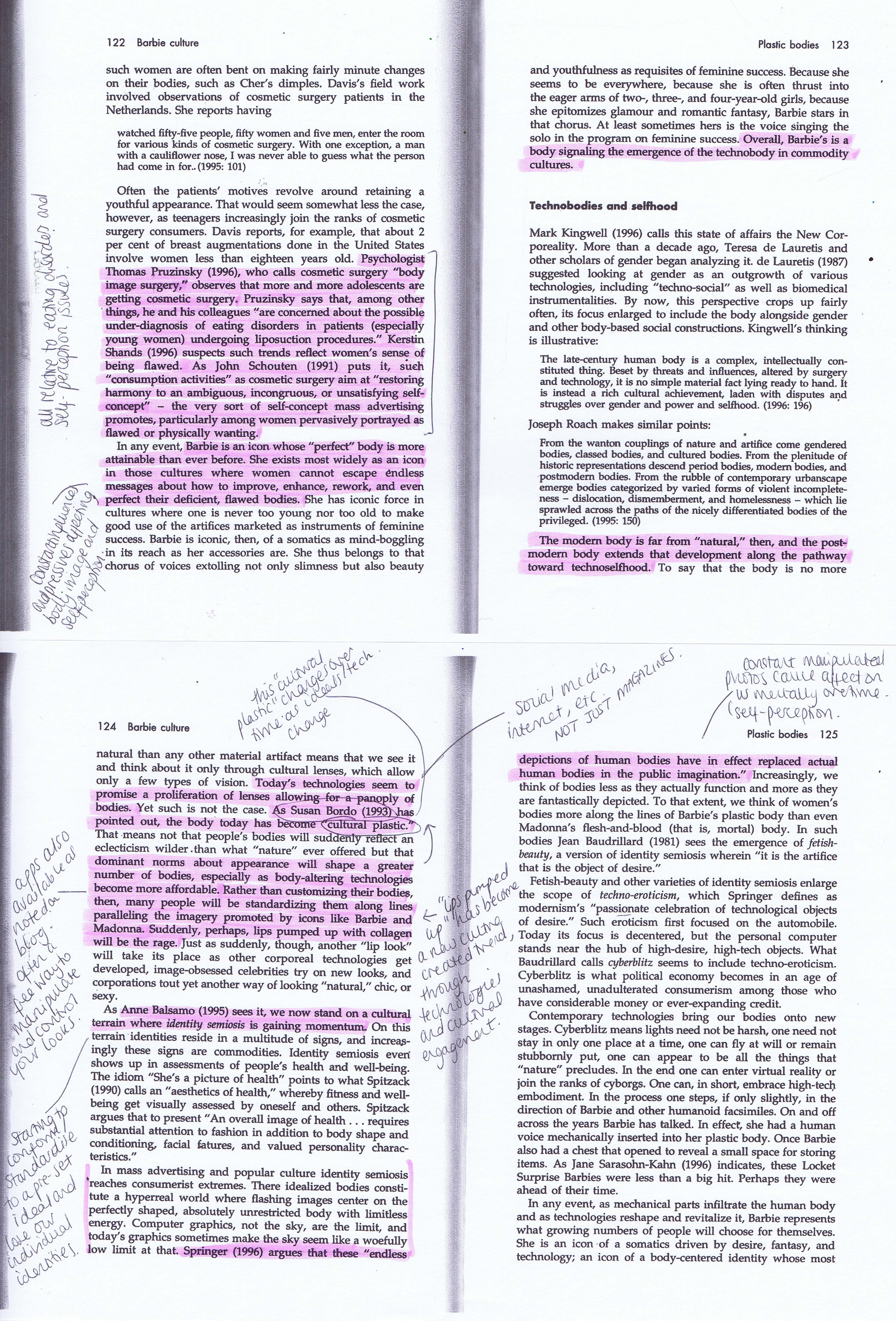
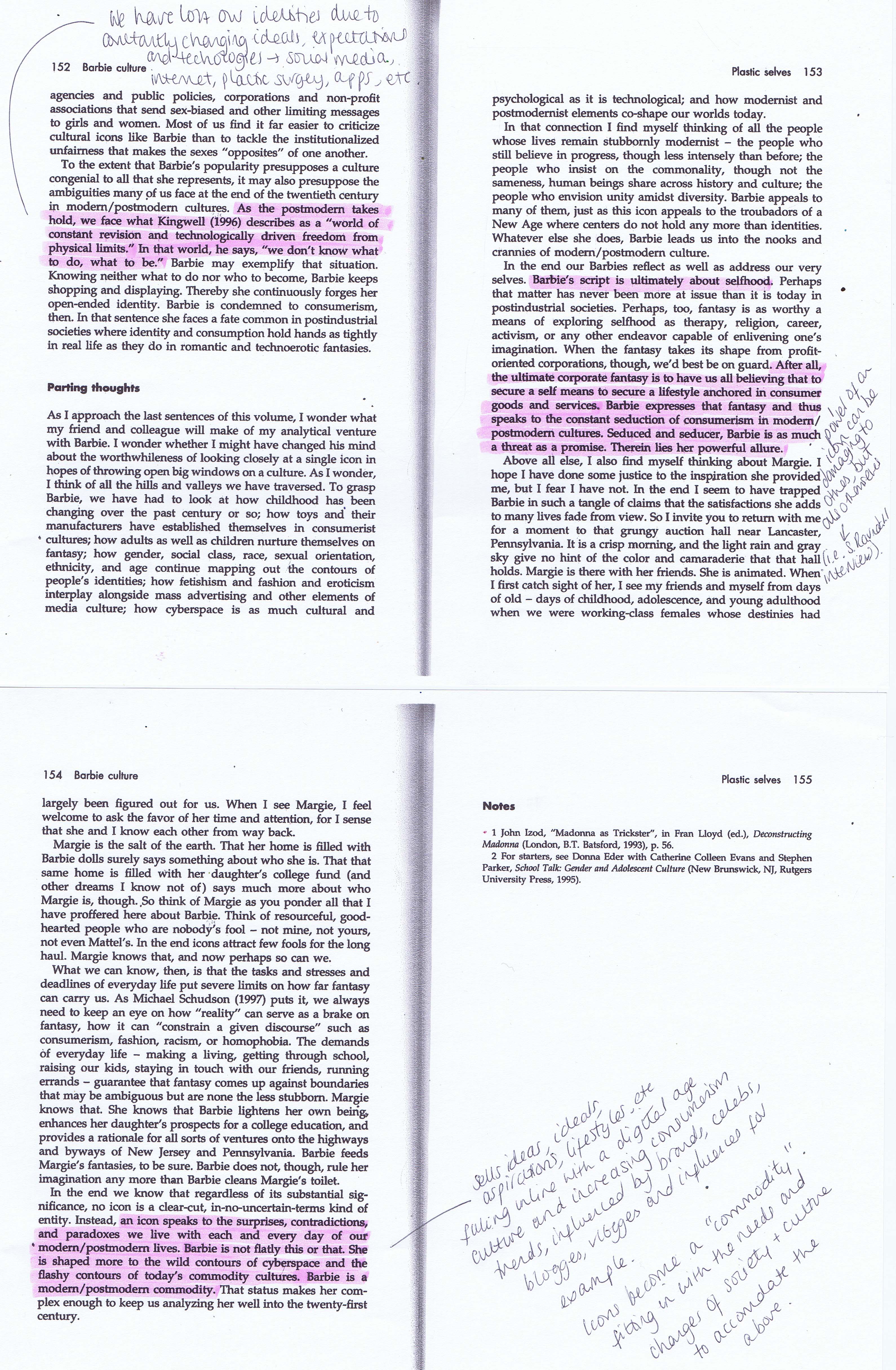
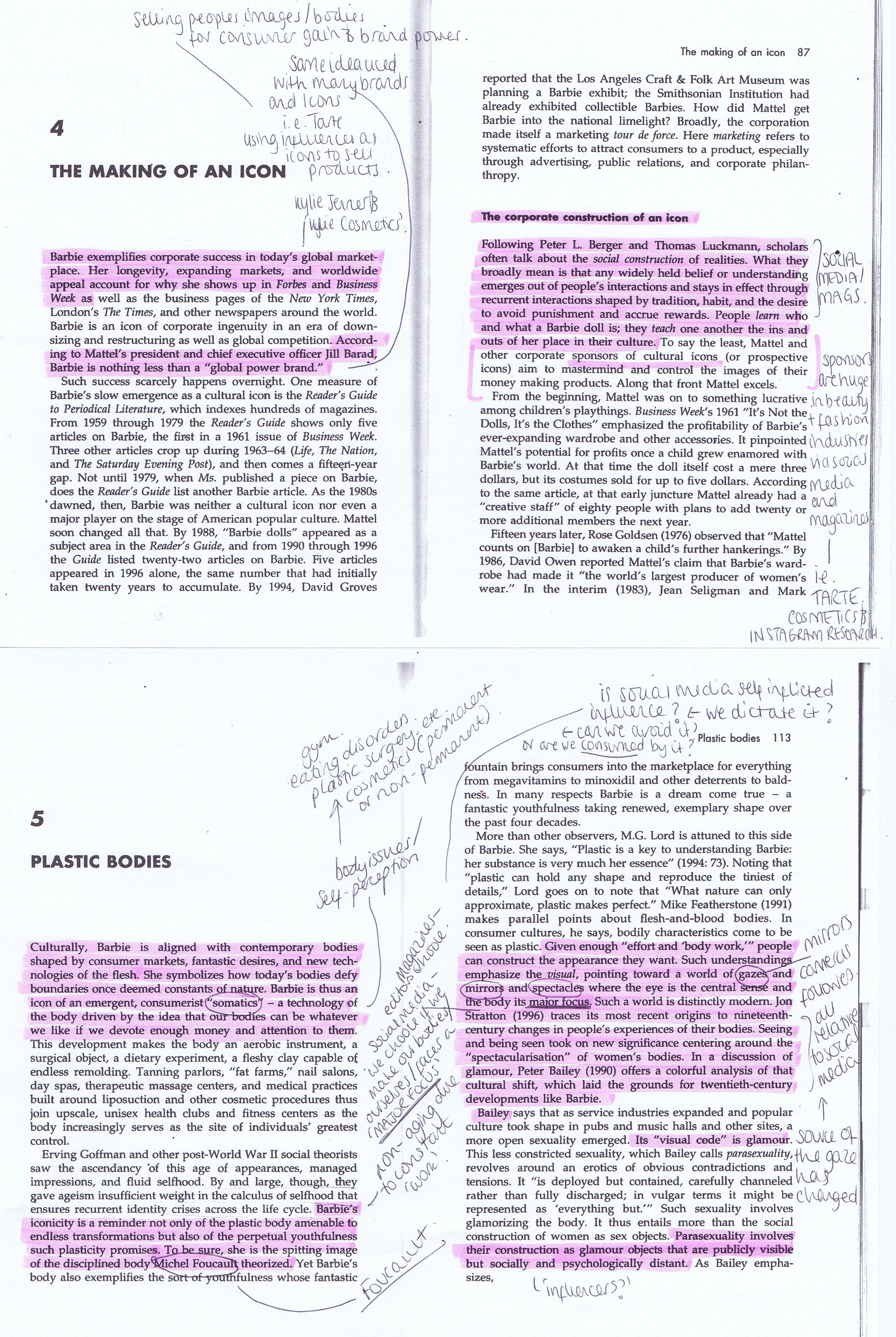
  • Another point I took away from this was the denial in that what they are doing, particularly Lanon is ‘natural’. A topic which has raised several times throughout the documentary, and has also arisen both in my research and readings of ‘Barbie Culture’, by Mary F. Rogers, and conversations around the idea of a ‘controlled natural look’ whereby one uses makeup in a minimal manner and still denotes this as ‘natural’; whereby actually, natural would be wearing no makeup at all.
  • The desire and need to be deemed as attractive and ‘accepted’ also came into context during the dialogue below, whereby 10k followers allows you to be ‘rated’ better as a model, or whereby you have to gain your boyfriends approval of your in order to be happy with your body yourself.
  • I also found it interesting that Millie noted that since she has focused more on her body, she has become more critical, self-aware and conscious, stating she would ‘do anything to cover up’ parts of her body she didn’t like.
  • Social media has become a daily part of their life – using the Boomerang app to create loop videos for Instagram, and taking “hundreds” of selfies everyday.
  • Overall, the main key point I took from the conversation Anne had with this couple is that, social media has had a profound affect on what they think they need to achieve physically in order to achieve their career goals, be happy with their bodies and get noticed for magazine articles. Ultimately, both were aiming for fame, and quite clearly playing the game, manipulating their bodies and endorsing social media to their advantage.
03:17 – 04:58 mins
Anne: When you saw Millie in the restaurant what was the first thing about her that you noticed?
Lanon: Well, her looks. I didn’t know her personality then. I imagine she wasn’t wearing much.
A: Would it of mattered if she was slightly overweight?
L: I have a type. The size i am attracted to whether its from promotion and magazines but it’s something I have grown up with, so I don’t know. It’s just a slimmer build.
[Anne talking to Leonard about his figure – what he wants to achieve from the gym. He talks about his current shape]
L: 45inch chest, 27inch waist … which is very, very small
A: Who else would have a 27inch waist?
L: A 15 year old girl?
A: Can we have a look at your waist?
L: [goes shy after bragging and covers his stomach with his arms] oh, please, I mean you can follow me on Instagram, that way you’ll see. Follow my social media.
A: Why are you reluctant to show it to me?
L: People, people are desperate to critique.
[Anne talks about his 130k following on Instagram during VT]
05:59 – 07:00 mins
[Anne talks about how his Instagram following has recently landed him some modelling jobs in voiceover]
L: I’m currently in about 5 or 6 magazine articles a week at the moment. It’s all because of this [holds up phone]
A: And, taking your top off and posing for a shoot is that different from just an Instagram?
L: Very different. The diet you have to do up to the shoot is very, very tough.
A: Like what?
L: It’s very unhealthy but it er, it, it’s up your water to an unhealthy level, and then once you get close to dispute, you cut the water, your body keeps rejecting the water, so you get very, very dry. You’ll then have a lot of carbs and sugar, it will fill your muscles, all that together if you time it right, it, it’s amazing what your body can do.
A: Is it worth it, all that?
L: Yes, it is, because you’re representing an image. If, if –
Anne: – It’s a false image.
L: It’s it’s not, it is an image you have achieved naturally, and just altering my diet to get the image a bit better for the shoot.
07:01 – 08:40 mins
[Anne in Voiceover VT: Millie is equally desperate for a flawless physique that will allow her to be a fitness model]
Anne: How many photos do you take Millie?
Mille: I take hundreds. I want it to be like, perfect and I want to make sure that I like it, and that takes a very long time for me.
A: Because you’re striving for perfection?
M: Until i’m happy.
A: Yeah
M: Bikini photos, do get more, get more likes.
A: Is there a certain amount of Instagram followers that gets you a better rate as a model?
M: They say that 10k followers, your rate doubles.
A: What are you at the moment?
M: 2k followers.
A: So you have 8k to go?
M: Yes I ha-, I’ve got a lot of work to do.
A: The flip side is that, each time either of you put something on Instagram, it’s an opportunity for somebody to criticise you?
L: Absolutely.
A: Who is it to approve of what you’re doing? [to Millie]
M: Probably Lennon, yeah, I want him to be proud of me and to be attracted to me.
L: I’m visually honest.
M: Yeah, he’s very honest.
A: And, who’s important for you in terms of approving of your photographs? [to Lennon]
L: It is, me, I make the decision on what I like or not.
[whilst cooking]
A: [to Millie] are you happy to show off your body?
M: Now i’m paying more attention to my body being in the fitness industry, I feel like my confidence actually is less.
A: is it?
L: That’s, that’s –
M: Yeah. I’ll see something that I don’t like on myself still, I will do anything to try and cover it up.
09:10 – 09:21 mins
A: Would some people be right to say that you might be a bit obsessed?
L: If you put it like that than yes, but, it’s a lifestyle.
A: Would you mind being ugly?
L: i would rather be better looking.
A: [to Millie] would you mind being ugly?
M: Er, I, I’d work with what I’ve got.
A: Okay.


I decided not to carry on transcribing from the documentary as it was taking too long to content I would want to talk about, so from here on have paraphrased and included short quotes if needed.


Miriam Margolyes:
screen-shot-2016-10-21-at-23-28-03

Image Source

  • 75, English Character Actress and Voice Artist.
  • The main point taken away from this conversation between Anne and Miriam was that, Anne said she is “always on a diet”, whilst Miriam notes that she isn’t, and enjoys food, however watches certain types of foods due to health concerns, but is not actually concerned with what she looks like in comparison to Anne, whom chooses to control this aspect by her food choices. This made me think about the prolonged effects of the media and influence, causing eating problems and therefore in some cases eating disorders – “The Costs of Eating Disorders – Social, Health and Economic Impacts report, commissioned by Beat and produced by PwC in February 2015, estimates that more than 725,000 people in the UK are affected by an eating disorder “
  • Miriam notes that she feels she enjoys life more because she doesn’t have the constant worry about her body image. This I can relate to being a recovered Anorexic patient for 4 years, and know that now I feel freer without the constant pressure to conform to societies standards and ideals.
  • Anne notes that “we all have some sort of Barbie doll wish, somewhere, even the most intelligent of us have some sort of strange dream about looking differently”, again going back to the idea of ideals, standardisation, confirmation, perfection and the idea of success which Mary F. Rogers notes in ‘Barbie Culture’ and Naomi Wolf’s ideas of the ‘Beauty Myth’ and the undefying male gaze which perhaps subconsciously or consciously affects us as noted above in the conversation with Millie and Anne (Couple 1) about how she reaps acceptance.
  • I found Miriam’s approach to body image and self-perception interesting and refreshing, not wanting to conform with societies ideals and instead lives her life for herself, not for a curated Instagram stream or a ‘Barbie Doll figure’.

Three Ladies Getting Ready to Go Out in Liverpool:

screen-shot-2016-10-22-at-00-20-41

screen-shot-2016-10-22-at-00-21-31

screen-shot-2016-10-22-at-00-21-48

Image Source

  • Anne introduces the new scene discussing how the content and covers of magazines filled with celebrities, footballers wives, etc, has had an effect on how we see ourselves and what we do to change how we look to feel good and to ‘fit in’.
  • “Liverpool is the Glam Capital of the UK … people in Liverpool will spend 3 times more on average, on looking ‘good’ than anywhere else in the country” – Anne
  • Three ladies are out shopping prior to getting ready, with rollers in their hair and state that before they even go out will spend around £100 each on makeup and clothes before they go out – getting their makeup done at a professional salon – showcasing alone how consumerism is feeding the beauty and fashion industries more and more due to social media and celebrity influences.
  • Ladies discuss their surgery endeavours – botox, lip liner tattoo, eyebrow tattoo, lip filler. The makeup artist, Eve, states that at one point of her life she was so self-conscious of her lips that she would cover them up when out on dates due to lack of confidence and not liking her appearance. This led on to Anne asking her about whom her influences are in regards to her lip shape, and eyebrow shape, this was her response which resonated with all of my research I have done so far in regards to influence from celebrities, in particular ambassadors of trends such as Kim Kardashian; “I think Kim Kardashian has definitely been a big influence in my life … I’d love to look like her” showcasing again how cultural icons and celebrity can have such influence on everyday peoples perceptions, lives, thoughts and actions.
  • In addition, when asked if any of the girls have had breast augmentations, one said she had, and the other said she hasn’t but, “would love too” and Eve expressed that living in a city with so many models, WAGS and celebrities, and where “fashion is such a big thing, it is all you are looking at. Image, and body image and you should look like this and that, it all gets on top of you, subconsciously I think more than anything else as well like, you’re just looking at it thinking my lips need to be bigger, and don’t think why they need to be bigger” evidencing the points made previously in my research regarding the influences of social media and the likes of cultural icons such as Kylie Jenner, almost enforcing rules and standardising women (and men to some extent) to become a representation of them and what they have become, in turn showcasing their power, status and iconography as a celebrity, or influencer. I found this response from Eve very honest, and found that it is the truth behind the research question I am currently undertaking – admitting the issues, undergoing, or undergone the changes needed to standardise oneself and idolising women such as Kim Kardashian as the modern day ‘ideal’.

Morta Helhah:

screen-shot-2016-10-22-at-00-27-17

Image Source

  • 27, Luton, Dresses in Traditional Islamic Clothing
  • States that the garments are loose to cover the sacred parts of ones body which are for oneself and to be shared with family. States she thinks people who don’t cover their bodies are more likely to be more conscious, than those who do as allows for less judgements and allows for one to be judged on personality and intellect. This is an idea which I hadn’t thought about too much previously, however on a cross-cultural level it is interesting to see on the documentary how badly received this traditional, religious dress is in the UK even though by those whom wear it see it as a positive, empowering and ‘right’ by their cultural standards and ideals. I feel this highlights the ignorance of some in the UK, but perhaps this is due to lack of understanding, education and exposure in the media in a world and country specifically whereby we are now so multi-cultural. Perhaps if this changed, in the same was as a more diverse range of models were used in fashion campaigns, there would be less issues, mental health troubles, perceptions, negative connotations and ignorance.
  • It also stands out relative to Identity theories such as Social Identity noted by John Turner (1986), whereby, “a person’s sense of who they are depends on the groups to which they belong”. This also however, stands true to all of the above analysis and conversations noted from the documentary. Each person interviewed strived to change their looks and therefore their ‘identity’ to conform with a certain lifestyle.
  • Many argue the use of this conservative dress in debates surrounding feminism and female oppression, however this is down to personal interpretation and opinion, but to many is a positive in a highly demanding world.

Luisa Omielan:

screen-shot-2016-10-22-at-14-30-29

screen-shot-2016-10-22-at-14-29-45

Image Source

  • 34, Stand-up Comedienne
  • Discusses how her work allows her to be brave, bold and daring using humour as a way of sharing her ideas on how society has shaped itself – trends regarding ‘thigh gap’ fad, and how this is the ‘ideal’ look went viral online with 40m views. Luisa states you have to be brave enough to say, this is what my body is like, I am happy with it and so should you. Doing so through comedy allows this to be tackled in a light-hearted, yet honest way.
  • I found her approach refreshing and humorous and resonated with the satirical approach I have been using with my practical experiments, posters and Instagram posts to date.

Source:
BBC One and Anne Robinson. (2016). Britain’s Secrets with Anne Robinson: Body Image. Available: http://www.bbc.co.uk/iplayer/episode/b080byvs/britains-secrets-with-anne-robinson-3-body-image-secrets. Last Accessed: 20th October 2016.
B-EAT. (2016). Statistics. Available: https://www.b-eat.co.uk/about-beat/media-centre/information-and-statistics-about-eating-disorders. Last Accessed: 21st October 2016.
Turner, J. C., & Tajfel, H. (1986). The social identity theory of intergroup behavior. Psychology of intergroup relations, 7-24.

Article: Kendall and Kylie Jenner Talk Self-Perception, Young Men and Forever New Line (2016)

This is working towards objective 1, 4.C.

kendall-kylie-jenner-768x512

Image Source

I came across this article whilst reading about Kylie Jenner and her issues with low self-esteem online. I found this article interesting in a sense that it continues on almost from the ideas of self-perception and technologies as discussed in previous posts in detail.

Media or various forms, has projected the Jenner sisters into stardom, without having much of a choice. Below are quotes taken from the article along with questions written by the interviewer.

I found it interesting in particular, and extremely relevant that Kendall, now a Fashion model, notes that there isn’t an ideal, however through her career choices she becomes an ideal and becomes a ‘cultural icon’ as discussed previously by Mary F. Rogers. I also found her choice of wording in that “it’s not a genuine living” intriguing as this almost depicts the sense that she is aware she doesn’t live necessarily, ‘in the real world’ and therefore even if she didn’t intend to create a well-wanted image, it would of happened naturally anyway due to the media.

In relation to Kylie’s comments about being ‘natural’ I found this perplexing as even disregarding her ‘non permanent lip fillers’, she is know to wear makeup, have her own cosmetics brand and go to the gym/work out to achieve and maintain the body she wants, therefore making her quite the obvious. But in relation to the company she most likely surrounds herself with, being all she knows in the ‘real world’, she probably is actually quite ‘natural’.

For all their popularity and consideration on their looks, how do the Keeping Up With the Kardashians stars manage the steady investigation?

“It’s so weak,” Kendall said. “Particularly in this world, everybody takes a gander at you with an amplifying glass.”

“I imagine that that is simply idiotic in light of the fact that nobody is flawless,” Kendall told News Corp Australia.

“I know probably the most wonderful individuals out there and … I know they’re not immaculate, whether that is on the outside or within. Nobody will ever be flawless, so it’s only moronic to put somebody’s face on a magazine spread saying, ‘this is the thing that you ought to resemble.’ It’s sort of my occupation yet it’s not genuine living.”

Good examples

She has OTT lips, continually evolving hair (she’s been a blonde, brunette and had blue and green bolts) and general ‘I couldn’t care less what anybody supposes’ state of mind.

Kylie Jenner doesn’t bow to desires despite the fact that she’s a good example to young ladies.

“I don’t feel like insane weight in light of the fact that I generally stay consistent with myself,” Kylie said.

“I generally attempt to empower young ladies that admire me … to, as, not have any desire to be precisely like me. I would prefer not to urge young ladies to have blue hair and do whatever I do. I need to urge them to simply thoroughly act naturally on the grounds that that is the thing that I’ve generally done.”

Source:
Unknown. (2016). Kendall and Kylie Jenner Talk Self-Perception, Young Men and Forever New Line. Available: http://www.fashiontob.com/relationships/kendall-and-kylie-jenner-talk-self-perception-young-men-and-forever-new-line/. Last Accessed: 20th October 2016.

Social Network and Self-Perception Presentation (2015) by Bronte Mcmillan

Whilst researching Kylie Jenner and her self-perception issues, I stumbled across this presentation and found it very interesting to read and extremely relevant to my research question, in particular Social Media.
The main points I took away from the quotes/extracts shown below, are that, Social Media ultimately is a platform which allows us to share images of oneself which are desirable to others, and project an image which we want to convey. I also found Wong’s (2012) point that, we only present ourselves in a manner that we want to be seen – “our desired selves” – once again hinting at a narcissistic world of self-awareness, self-obsession and self-branding. This is further emphasised by technologies, as noted by Kraut et al., (1998) whereby a world of curated galleries on Instagram for example will allow the above to happen autonomously, naturally and distinctively in a world where “Internet usage in particular, will continue to transform economic and social life on a global scale”.

“The social comparison theory was first discussed by Leon Festinger (1954), he described it s the instinct that humans have to assess their abilities and opinions. When we are unsure about our abilities and opinions, this theory states that we establish our own personal and social worth based on how we compare to others (Psychology Today, 2015).”

“Information and Communication Technology is rapidly becoming an accelerator of political, economic, social and educational globalization” (Agbatogun, 2012).”

“Self-presentation among people tended to lean towards their desired selves and away from their undesired selves” (Wong, 2012).”

“Primary motive for presenting oneself on the internet sites was aimed to convey desired images to the others” (Wong, 2012).”

“Economists, social scientists, and technologists believe that the rapid advances in technology, and the huge
increase in Internet usage in particular, will continue to transform economic and social life on a global scale
(Kraut et al., 1998).”
Social comparison:
Social comparison divided into 2 factions:
1. Upward social comparison
2. Downward social comparison
Can be divided into positive and negative:
1. Positive = drive to succeed
2. Negative = social isolation, negative thoughts
Upward Social Comparison
1. Positive: makes you feel better about self/ self enhancing.
2. Negative: bullying
Downward Social Comparison
Split into positive and negative:
Twitter
Avatar Comparison
Identity tourism
Linked to self-concept
When less appealing compared to others, act bad.

Source:
Bronte Mcmillan. (2015). Social Network and Self-Perception. Available: https://prezi.com/ve5wnunhbqof/social-network-and-self-perception/#. Last Accessed: 20th October 2016.


Further Postcard Development and Mockups

This is working towards objective 4.C.

2016-10-20-16.26.30_resized.jpg.jpg

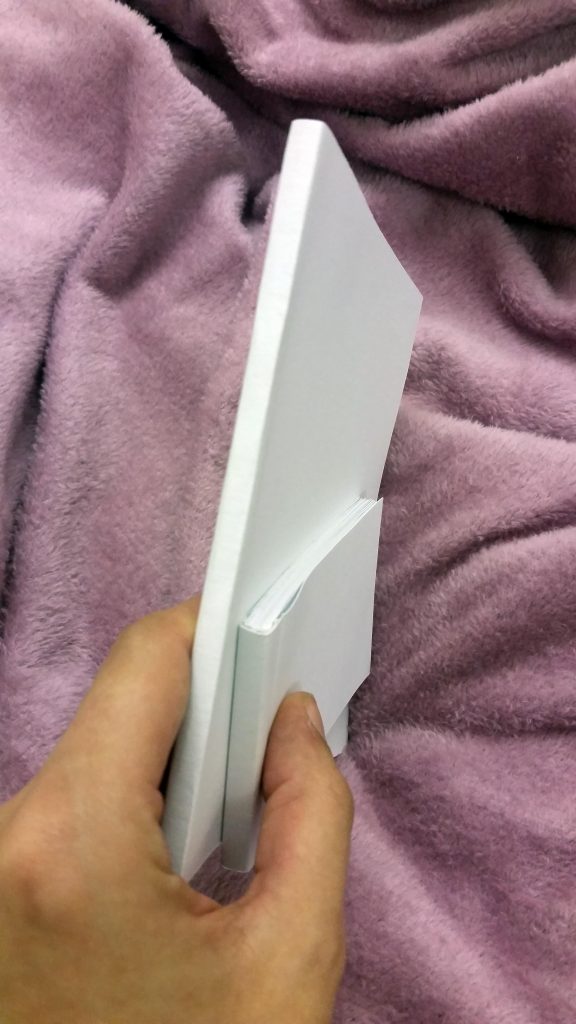
I decided to further develop the single postcards into a perforated postcard book, whereby the cards can either be used as prints on a wall for example or shared and sent amongst friends and family for instance, sharing the message on how the beauty and fashion industries affect our sense of self-perception and body image, whilst also attracting engagement and interaction from the user in the same way that on social media one would tag a friend in a post which may be of interest or relevance to them too.

I plan on producing mockups of these to test the functionality, binding, perforation and stock.

Below shows the process of producing the prototypes.

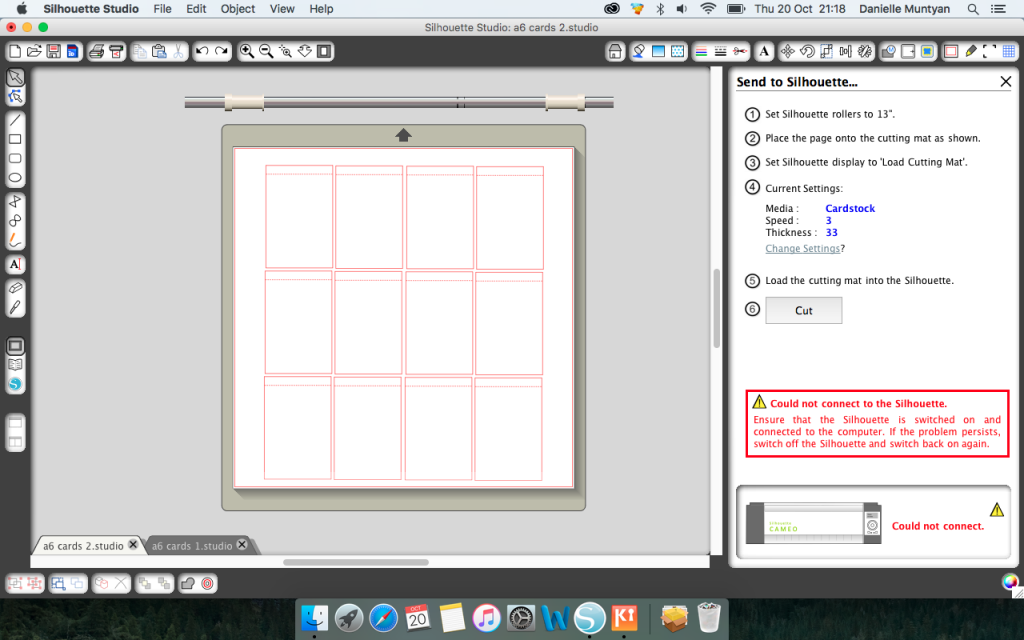
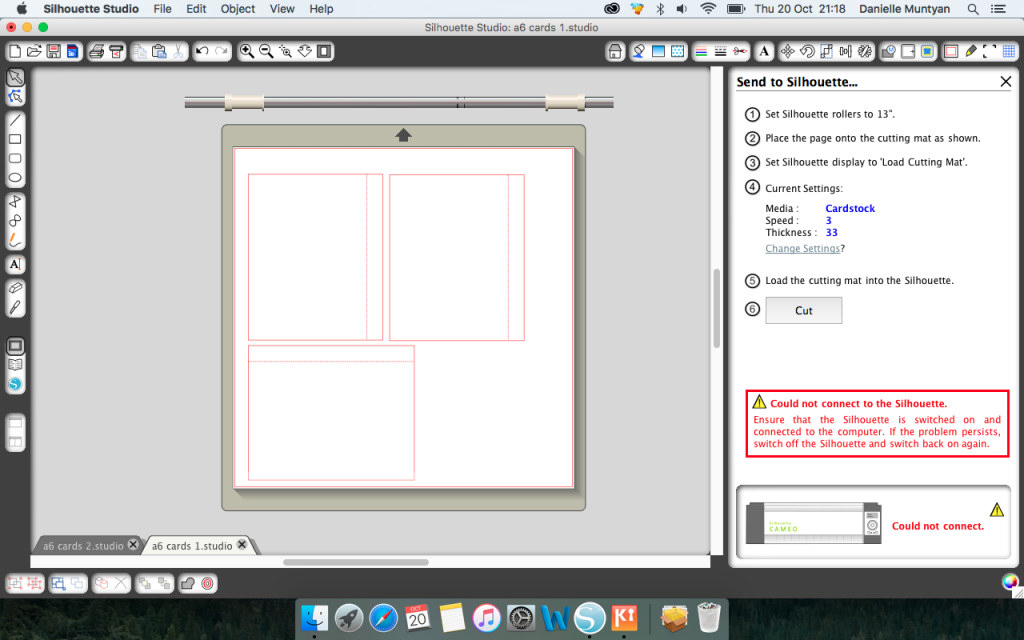
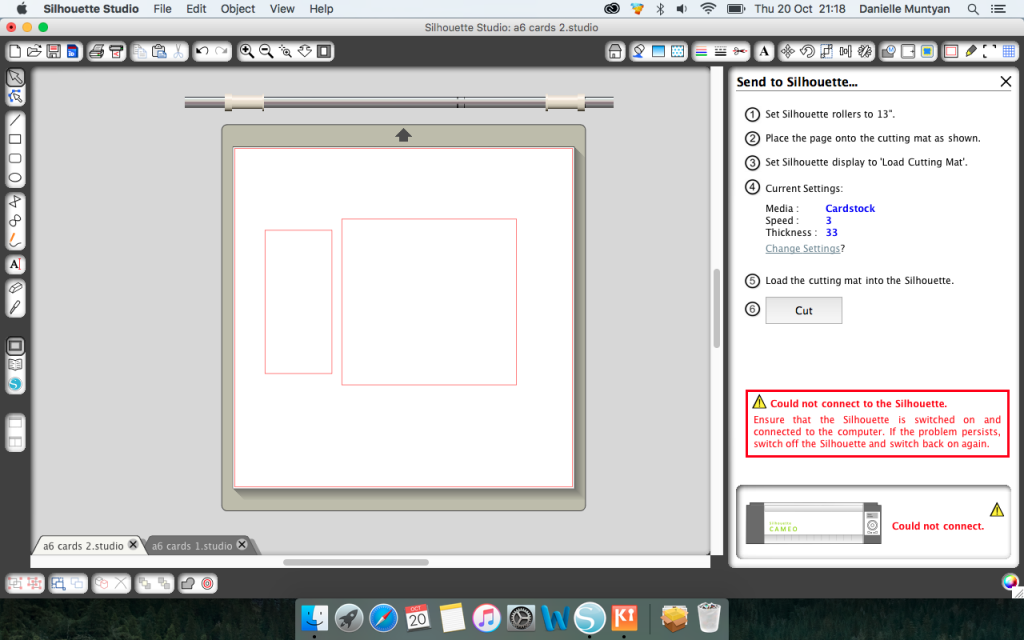
  1. I have used my Silhouette Cameo die-cutting software and tools to produce perforated postcards. Below shows the setting up and drawing out of the A6 cards with 1cm bleed – solid lines are cut lines, dashed are perforated. I really enjoy using this process as is methodical and very accurate, allowing for the books to look professional but at a low-cost of production. The outer covers of the books have also been drawn to ensure that the cover fits accurately and conceals the spine.

screen-shot-2016-10-20-at-21-18-51

screen-shot-2016-10-20-at-21-18-35

screen-shot-2016-10-20-at-21-18-31

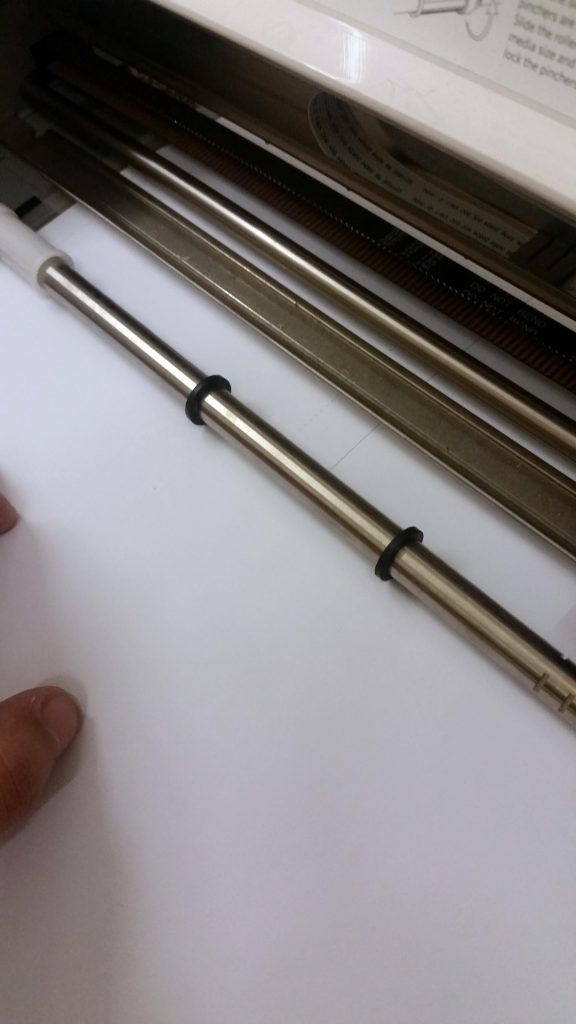
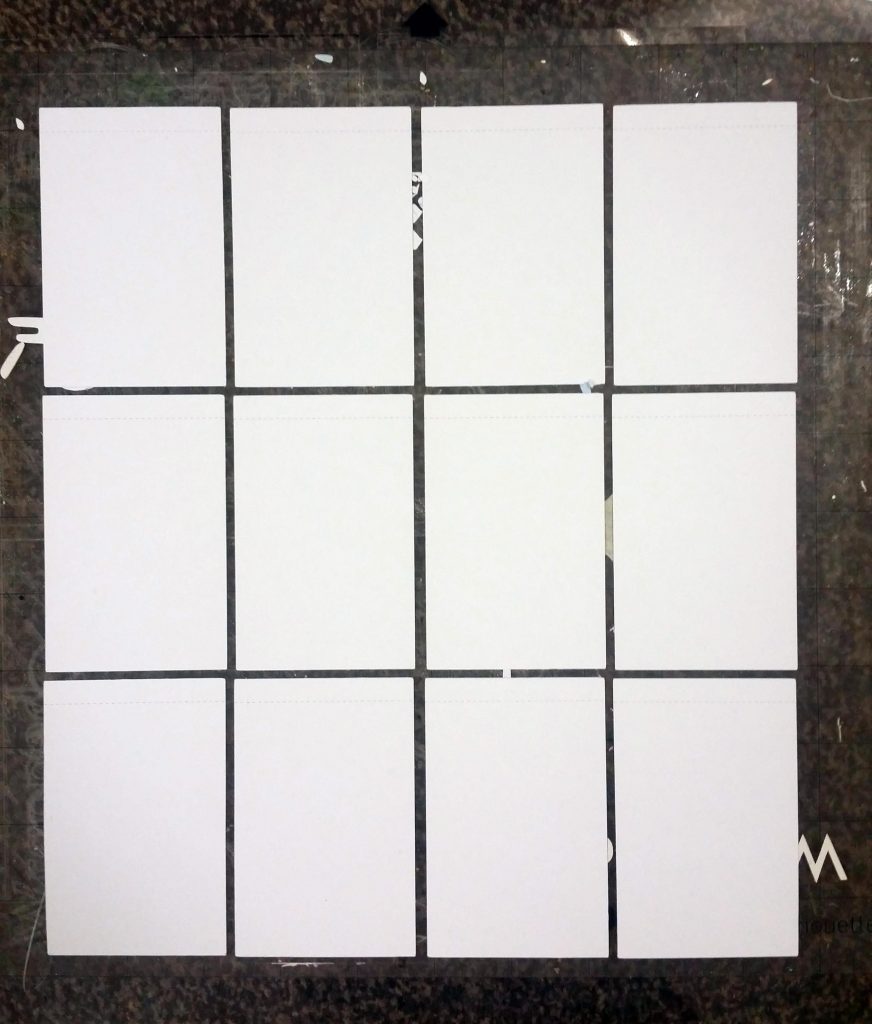
2. Below shows the paper on the cutting mat, which has been inserted into the Silhouette Cameo allowing for a blade to cut the paper. I find die-cutting a better way of cutting paper than laser-cutting as it does not burn nor leave marks on white paper in particular. The only thing to consider is that the blade is sharp and new to ensure that no pulls are made when the paper is on quite a fast cutting setting.

20161020_191038

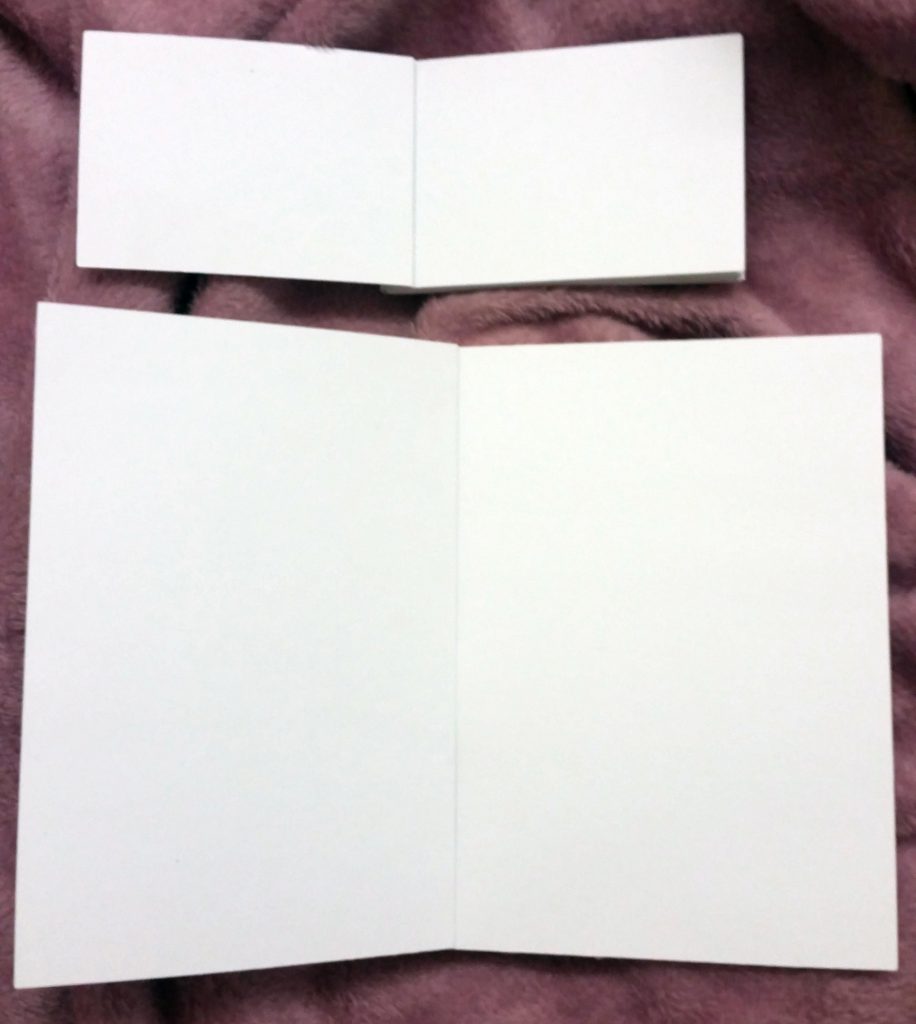
3. Below shows the cut edges and perforated tops of the landscape postcards. These have not been cut out to scale, and have been simply cut to test which orientation works best when bound together in regards to aesthetics and sturdiness. The excess paper has been removed below also to show the cards which are all exactly the same size.

20161020_193752

20161020_193823

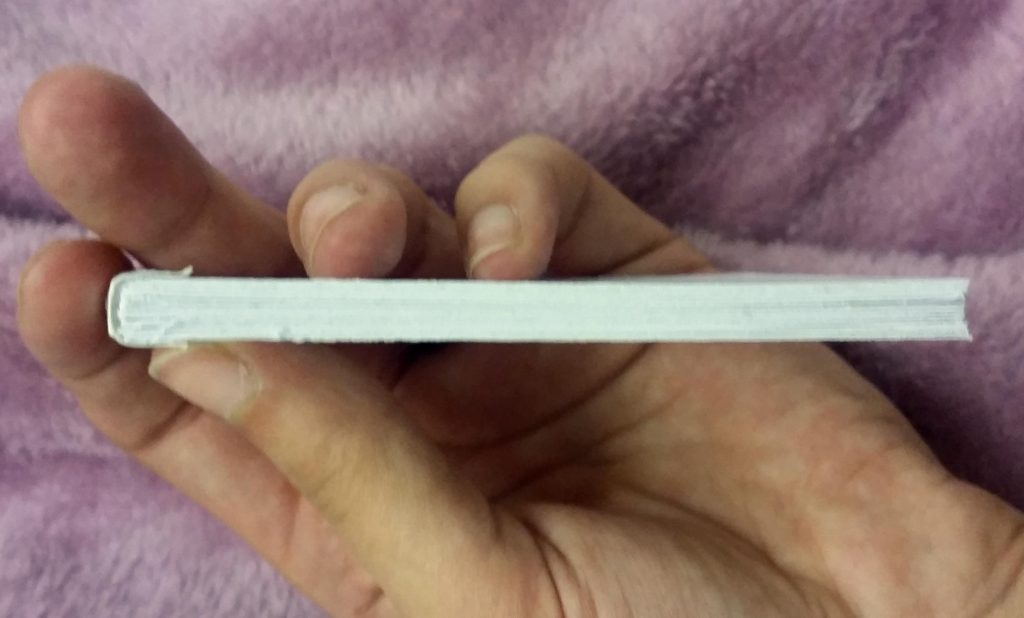
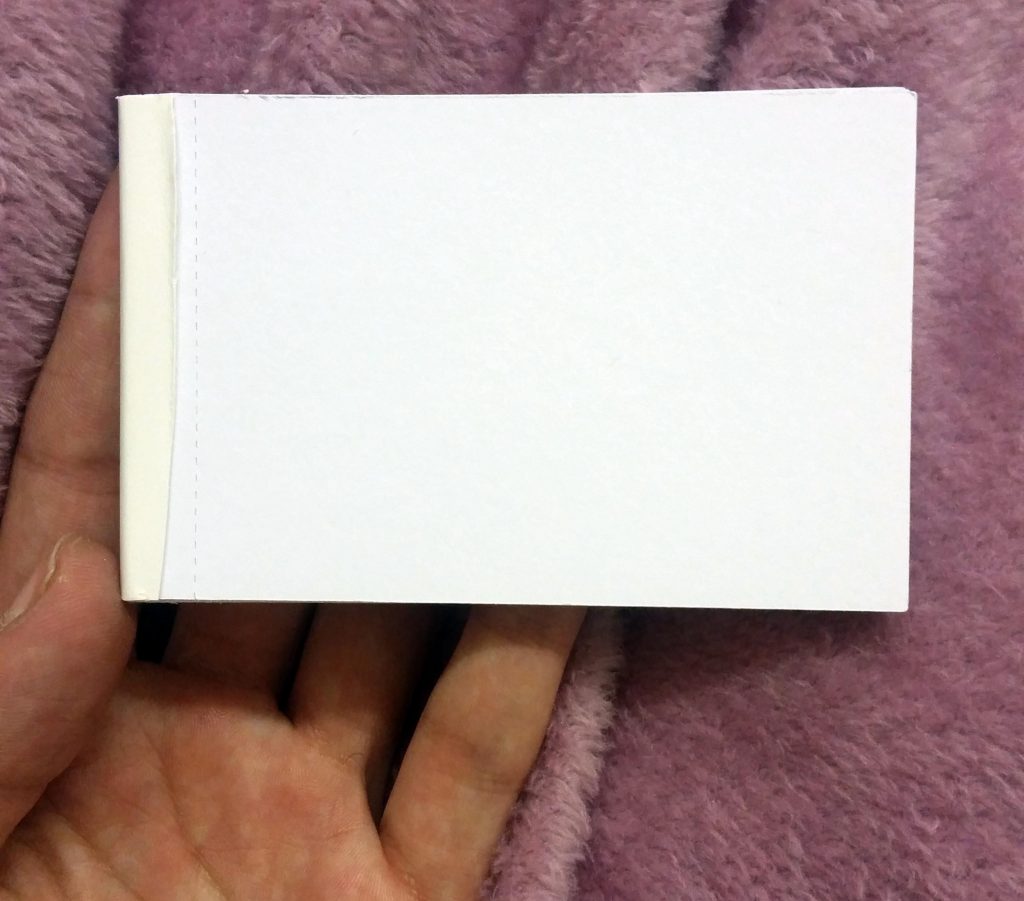
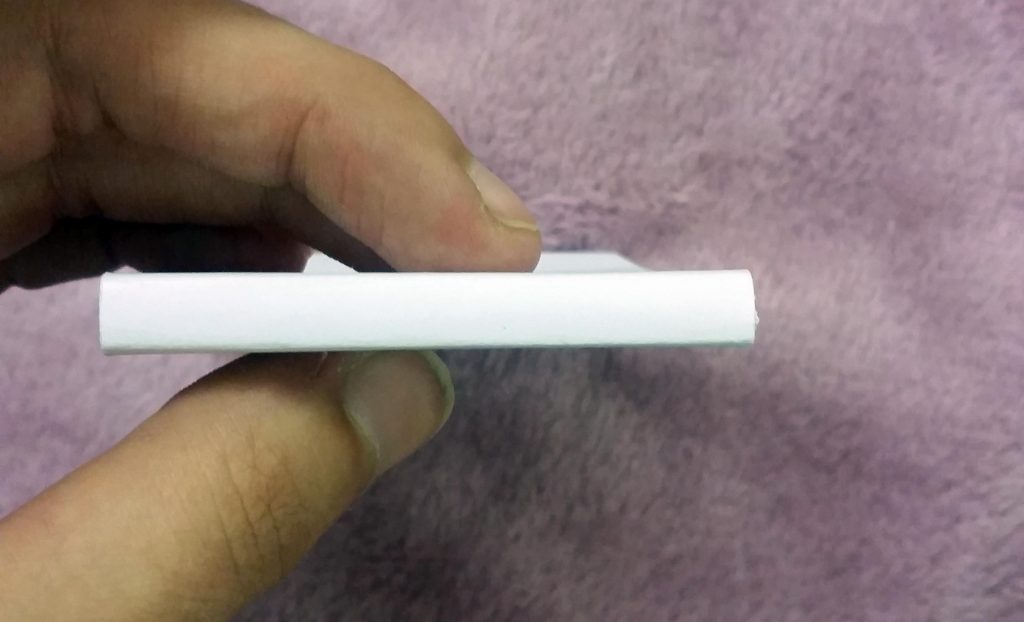
4. The next step is the perfect binding of the books. To do this I have used glue strips, and my Therm-A-Bind machine. The strips as shown below are placed down the spine, covering the inner pages protecting them from curling from heat and glue. Once heated for a minute, the glue binds to the spine and then cools solid. It is important at this step to ensure the pages are all inline and secure with no fallouts, as well as ensuring that no glue has seeped between the edges, which ensures for a professional finish. After this, the excess glue strip and backing is cut off leaving a simply bound book. I found that the portrait book had less pages and therefore didn’t finish as neatly, or ‘perfectly’ as I’d of liked in comparison to the landscape book. This is something in the future I would improve on and include 20 pages opposed to 15.
20161020_200042

20161020_200106

20161020_201129

20161020_201146

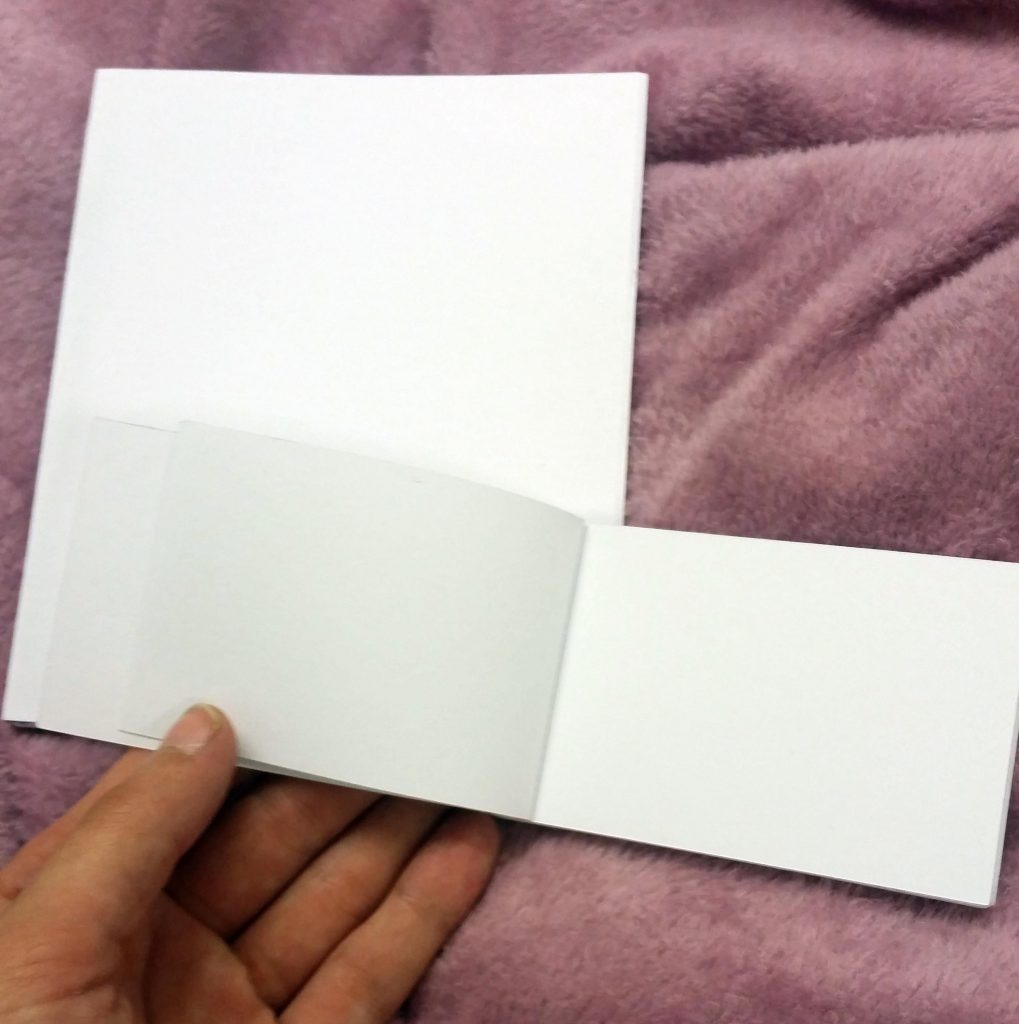
5. The outer cover is cut and then wrapped and securely glued at the edge, leaving room for a fold line at the 1cm bleed in order to ensure the cover folds up and allows the perforated postcards to be removed individually. This is shown below.

20161020_201750

20161020_202349

20161020_202412

20161020_202423

20161020_202433

20161020_2024120

20161020_202910

Overall I am really happy with these perforated books, and think the next step is to produce a mockup including full colour postcards.

At this stage, I realised once I looked at the prototypes above and that I now needed 20 postcards, I need to develop more. These are shown below – an expansion of previous designs keeping inline with concept, aesthetics, theme and idea.

postcards-2-14

postcards-2-13

postcards-2-12

postcards-2-15

postcards-2-16

postcards-2-17

postcards-2-18

postcards-2-06

postcards-2-08

postcards-2-09

postcards-2-10

postcards-2-11

postcards-2-02

postcards-2-04

Interview with International Supermodel Confirmed 

This is working towards objective 1 and 3.

I have confirmed an interview with an International Supermodel regarding how the Fashion and beauty industries may affect her own perception.

At present I cannot name her due to confidentiality agreements that her name would not be disclosed online, only on physical paper submitted for marking. This complying also with the Ethics Policy underpinned by the college ensuring fair practice and ethical research is taking place, not damaging or harming myself or the participant.

I am currently trying to collate my research into to put together relevant, concise and accurate questions in order to gather the required information to assist with the unpicking of my reseach question.  I have the option to either visit her in person in January or I can Skype her between now and January if said interview is ready and confirmed.  I simply want to make sure I utilise the opportunity to gain the best information as this will be my only chance to speak to such a person with an incredibly high status within the Fashion industry. After interviewing Samantha Ravndhal via Periscope quite suddenly and unexpectedly I didn’t feel I got the most out of it. I did get very good information and first hand research which has proved to help my practical projects and research, so want to ensure that this opportunity is not lost.

I feel after talking to Samantha and gaining honest insight in how a career within the Beauty Industry affects her, it will be really interesting to speak with someone from the Fashion Industry also for comparison and analysis.

Postcards: Development and Experiments

This is working towards objective 4.C.

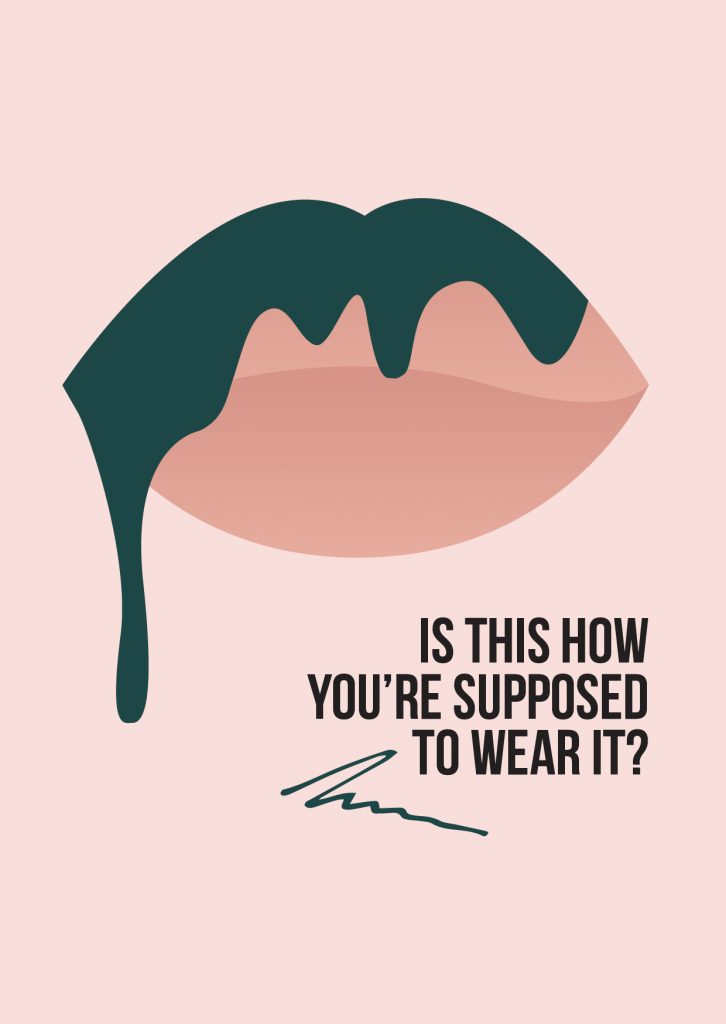
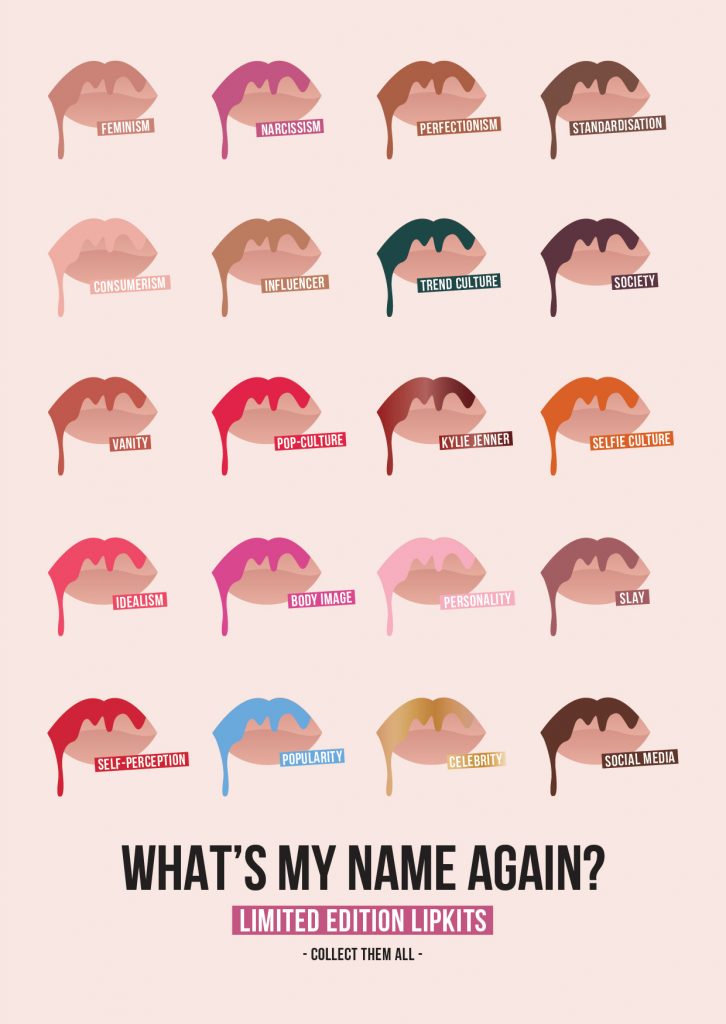
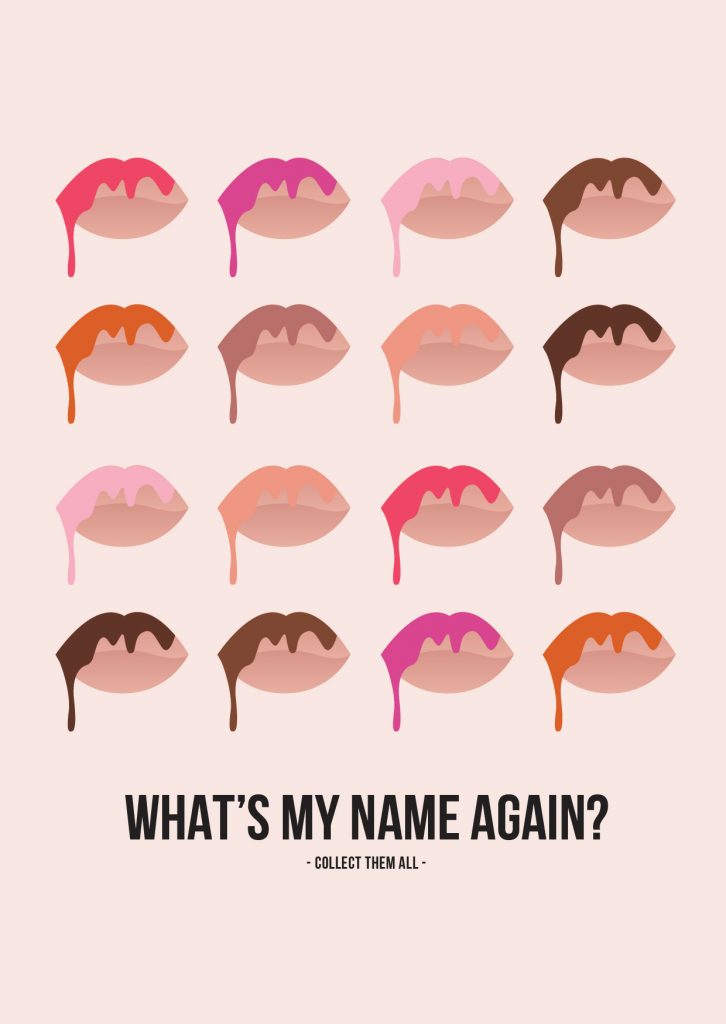
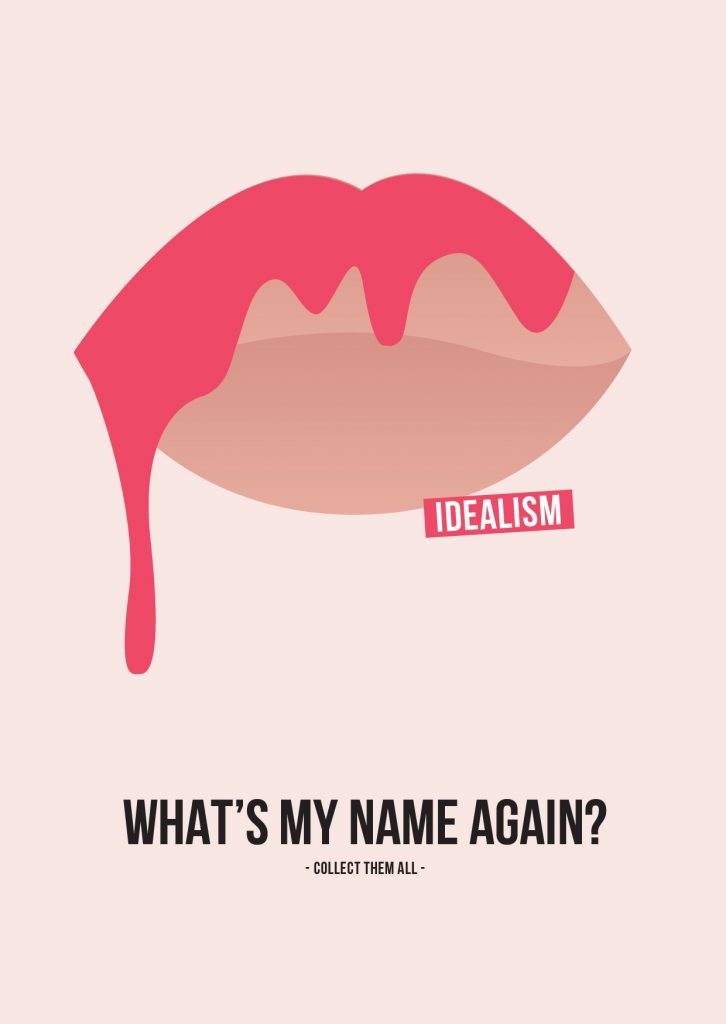
Adapting the posters into postcards was a part of the Poster Series/Blogging Posts brief that I had not planned on originally, however felt they may be good promos or teasers to hand out promoting the final series of posters for example if this is realised into a final project. I also envision these to be handed out in promo packs, consisting of Tote Bags, Posters and Postcards. Therefore, below shows my experiments with layout and composition.

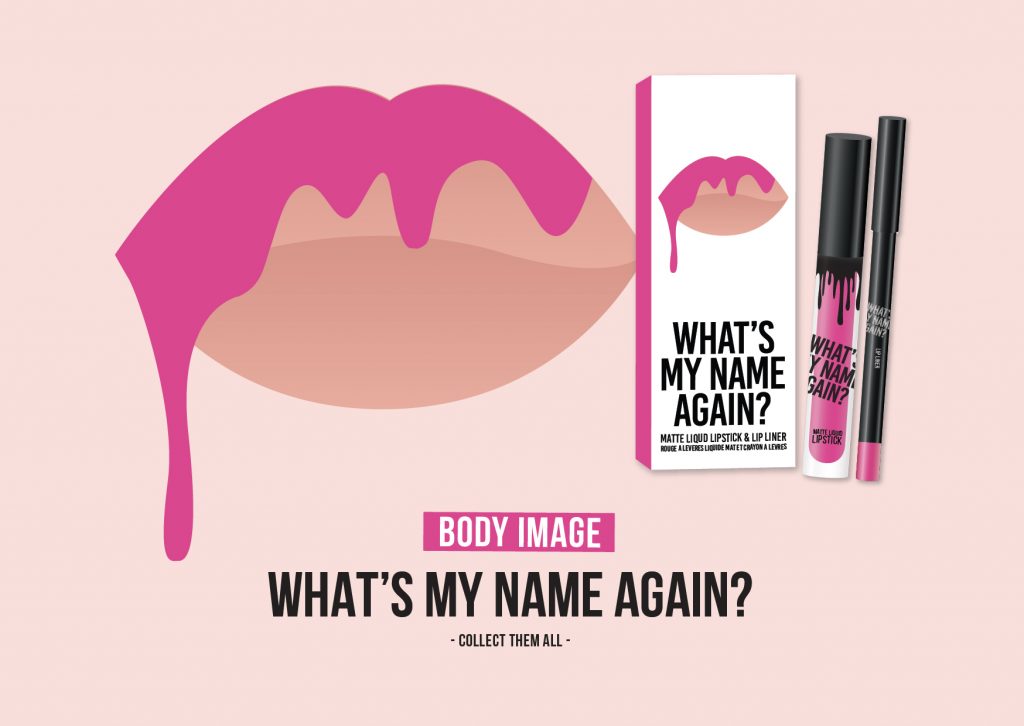
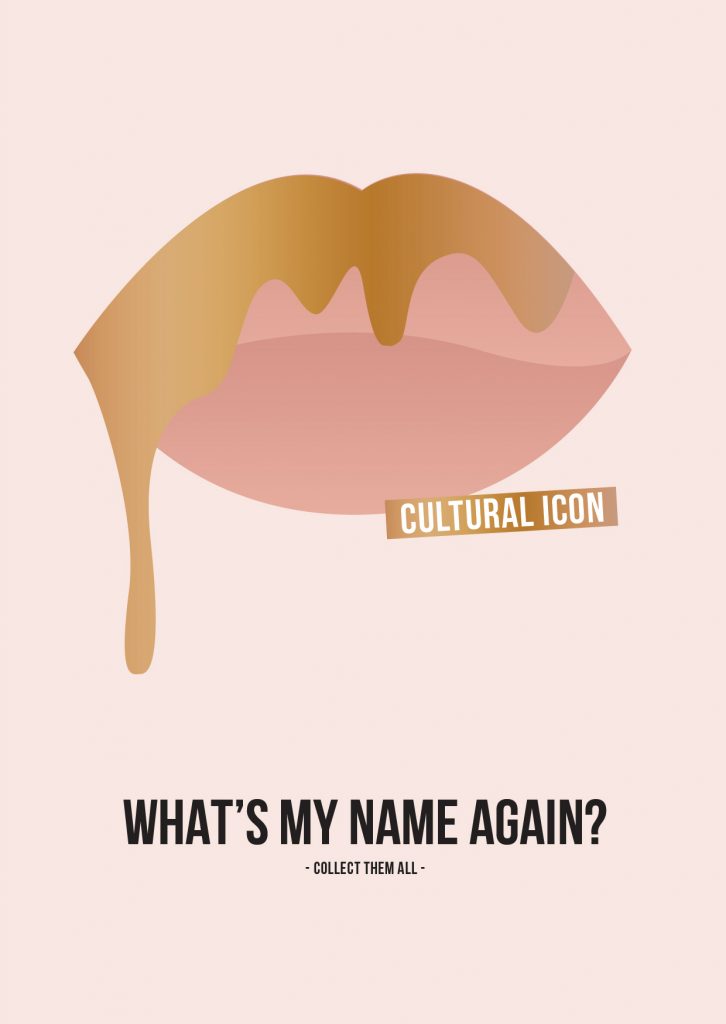
I wanted to try and add some consistency to the postcards whilst hinting it at the issue at hand with the tag line, “what’s my name again?” and “collect them all” encouraging a theme whilst adding further context to the topic/issue at hand of consumerism, brand culture and its impact on our self-perception. I feel that this works well on the poster with different theories/colour swatches and could be subtly introduced into the postcards in this manner.

I also experimented with format – landscape and portrait – as I felt in some cases as shown below, the composition of the design elements sat better and utilised any ‘dead space’ much better using landscape format, than portrait, however for the final resolution I would like them all to be consistent or to have a series of each format simply for consistency.

screen-shot-2016-10-19-at-17-41-36

screen-shot-2016-10-19-at-17-39-14

screen-shot-2016-10-19-at-17-37-10

screen-shot-2016-10-19-at-17-25-22

screen-shot-2016-10-19-at-17-25-17 screen-shot-2016-10-19-at-17-25-12

Postcards for Print Tests (Matte & Gloss):

Similarly to the posters, I want to experiment with both Matte and Gloss finishes to see which gives better visual impact, works better visually and commercially , whilst hoping to be consistent with the posters.

postcards-2-rgb-07

postcards-2-rgb-01

postcards-2-rgb-02

postcards-2-rgb-03

postcards-2-rgb-04

postcards-2-rgb-05

postcards-2-rgb-06

Poster Print Tests: Matte and Gloss

This is working towards objective 4.C.

After experimenting with screen-printing last week, and since developing a further range of posters I wanted to try digitally printing on both Matte and Gloss stocks to see how viable these would be as commercial prints to sell as a way of engaging with the target audience, whilst be able to collate a final range of prints to take forward into semester two and develop into a realisable outcome.

As previously noted, I didn’t feel that screen-printing allowed for the depth or detail that I wanted to achieve through my design work, and felt that digitally printing would allow for the CADS to almost look photographic, whilst allowing the colours to pop. I also felt that digital posts on Instagram and a ‘digital age’ target audience would appeal better – as evidenced in the insights taken from such Instagram posts which I have previously analysed.

I felt that when I printed the Matte versions of the 4 posters which I have currently developed, I felt these didn’t give the right colour impact and brightness which I had expected and also didn’t feel that the print quality was the best to sell commercially. I then tried Gloss, as also seen below which I feel gave a much better instant impact of colour whilst the print quality was much higher. I noted on the Matte prints, that some of the shadows surrounding the CADs had rasterised strange when exported to a PDF, hence lowering the overall quality of the print. This was not the case with the gloss prints, and feel overall they are much more commercially viable whilst showcasing a ‘shiny’ finish adding even more depth to the gradients and colours used.

Photographs of both the Matte and Gloss print tests can be seen below.

Matte:

20161019_115149_1476874491534_resized

20161019_115153_1476874487126_resized

20161019_115159_1476874482817_resized

20161019_115203_1476874478809_resized

20161019_115216_1476874475017_resized

20161019_115219_1476874470664_resized

20161019_115227_1476874466737_resized

Gloss:

gloss-test

20161026_181713_1477519731067_resized

20161026_181703_1477519778625_resized

20161026_181707_1477519760281_resized


Questionnaire’s: On Hold

After beginning to plan my initial questionnaire’s and surveys surround the beauty/fashion industries and technologies, as seen on a previous post, I have decided that it is best to hold off until post-December when I have collated the majority of secondary resources, allowing me to write better questions and gain better answers.

I also want to spend longer looking at different ways of putting the quesionnaire’s/survey’s together in regards to data analysis. I also do not want to conduct research now which may not be as relevant once I have conducted more theoretical research also, and have carried out some more interviews with Industry (i.e. ASOS), as this may then require the questionnaire’s/survey’s to be re-written and re-sent out.

Furthermore, I also feel it would be beneficial to wait until the research lecture series has been completed so I am aware of the research options I have therefore making an informed and not-rushed decision. I would rather wait and ensure the research and answers are constructive and relevant, when I feel more confident with the research and knowledge I will of obtained in the first semester.

I still plan on researching contexts, technologies and theories for example, whilst interviewing those working in industry currently to help shape the research questions going forward.

In addition, with an International Research trip planned to visit Japan in Jan 2017, in order to explore my research question on a cross-cultural level, I feel this may also influence questions.