Contemporary Artists: Anna Potter AKA Top Girl Studio

I came across the work of Anna Potter, AKA Top Girl Studio whilst looking at Designers whom use Instagram as a platform of self-promotion and as a gallery for their work.

I came cross Top Girl Studio, a Graphic Design graduate from Central St. Martins, whom targets celebrity culture through her work in a very satirical and graphic manner, which I found resonant in regards to my work and my current practice, in particular the concept behind the work and the visual aesthetics used.

For example, the first screen shot below showcases a project with a ‘user guide’ relating patterns to issues such as “poverty” which are then relative to the art work. I found this very similar to the idea I have been working with in regards to lipstick shades, each standing as a theory, for example I have been using a Red Lipstick shade for Self-Perception, Purple for Narcissism and Gold for Cultural Icon. Furthermore, in regards to the style of work used for Anna’s booklets/zines I also find the use of pink very prominent alike in my work, utilising the feminine aspects of the beauty and fashion industries as a key to draw in attention. In addition, the work shown on Top Girl’s website is all relevant to the Fashion industry, Music artists and Celebrity culture, drawing on similar topics also, i.e. social media careers and how competitive, yet, ‘not real’ this can be.

I’m really glad to of found a current practitioner whom is also female, of similar age, works in a similar way, with similar aesthetics and also works with similar ideas, theories and concepts.

Going forward I would like to find other similar designers, artists and photographers for example, and would like to contact Anna in the future to see if she would be keen for a collaboration of some sort which could benefit both of our current and future practices, whilst joining forces as a team whom work in the same way and share similar beliefs, I feel would only add to the relevance and currentness of my MA studies and research question alone, whilst benefiting myself via collaborating Nationally and sharing ideas.

I find this work really inspiring and more so, extremely relevant to my current research, practice and ideas.

screen-shot-2016-11-03-at-13-36-17

screen-shot-2016-11-03-at-13-36-45

screen-shot-2016-11-03-at-13-37-14

Image Source

This Morning: Beauty Pageants and Self-Perception Issues/’Mirror Stage’ Theory

I came across this clip whilst watching This Morning several days ago, and found it very appropriate to to my current practice and research topics surrounding the beauty and fashion industries, and self-perception issues. I was struck by the fact that Sami Bushell, the mother in question, has been fake tanning her daughter since she was two-years-old in the name of beauty pageants. Sami noted that the only reason which this alone causes problems to the public, is that the term, ‘beauty’ is involved, and that if cheerleading or gymnastics were in question, as ‘sport’ going through such vanity-led processes are a ‘normal’ part of this experience. However, the argument being with this in particular is that Psychologists, believe that this from such an early age can have an on-going affect with ‘subjects’ more likely to develop Mental Health issues such as Body Dysmorphia and Eating Disorders surrounding their own issues with their bodies and self-perception as a rise of recognising early on that this is ‘how women should be’ because from the age of 3, girls are being judged and marked on this, even tho pageant goers may argue that the competitions are about ‘talent’, despite the name ‘beauty pageant’.
I found this resonant with Lacan and Freud’s understanding of the ‘Mirror Stage’, whereby between 6 to 18 months old, a child becomes self-aware of their reflection in a mirror, and becomes concious of such reflection, even though at this stage of their lives have very little mental or physical abilities which are possessed by adults. This shows that whilst even though a child can not control how they look, they become aware, and become aware of what they see is normal, relating back to the Beauty Pageant and Saami Bushell’s daughter as noted above. By applying fake tan and cosmetic products at an early-age, not only can this damage their skin and dermatology due to the formulations and chemicals for example which are used in such products, but could also can also affect their self-perception if this is what they become aware of seeing, and used to ‘looking’ like in their reflection. Lacan and Freud also relate this back to the ‘ego’, stating that “the ego is the subject rather than a subject” and one should be free as “I”, so go and make their own fate. I found this interesting in regards to the “ego” which as Freud notes can be built and discovered from an early age, allowing for issues with identity and belonging to subside alongside this as shown in the example above, whereby one loses their identity due to ego-defying tasks and competitions for instance. This is highlighted in the quote below.
“By contrast with the ego and the illusory sense of fictional selfhood it supports, the psychoanalytic subject of Lacanianism is an unconscious kinetic negativity defying capture by and within ego-level identificatory constructs.”
Furthermore, as well as thinking about the above theory in relation to the Beauty Pageant issue as noted above, I also found this theory and idea relative to the topic of previous employment and ethical issues as a designer, whereby I was asked to design cosmetic products for children from as young as 8 years old. During the presentation I discussed this and how a company could produce and design such products without considering the long-term impact on a child whom is using such vanity-led products from an early age. Some argue as in the video also, that children may want to copy the actions of their mothers, however, I personally feel that the same principal on the Mirror Stage resonates with this, regarding how from a young age with an ‘altered’ and unnatural appearance, one due to self-awareness at such a young age, may actually develop mental health and self-perception issues growing up, and feel that this should be considered more across the Fashion and Beauty industries to help alleviate some of these problems going forward. If children were brought up to love themselves for whom they are, and didn’t feel the name to be accepted within a certain group of society, for example dance groups or cheerleading groups, perhaps growing up they would continue in this vein and not be so swayed by the visuals the media puts out there and dictates at an early age how we should act like and look like.
Furthermore this also made me think again about the Beyonce Barbie Box Halloween costume as discussed in a previous blog post, and how in a way Beyonce is actively encouraging her daughter to grow up as herself and create her own identity based on her ego, as Lacan and Freud state in the Mirror Stage theory, however Sami Bushell is actively doing the opposite and whether realises or not is standardising and conforming her daughter to follow a set of guidelines and tick boxes on what is deemed ‘beautiful’ opposed to believing in that, and feeling that for oneself.
Sources:
Johnston, A.. (2013). Jacques Lacan. Available: http://plato.stanford.edu/entries/lacan/#MirStaEgoSub. Last Accessed: 3rd November 2016.
This Morning. (2016). This Morning “I Fake Tan My 3 Year Old”.Available: https://www.youtube.com/watch?v=MVbcNLn_lEo. Last accessed 3rd November 2016rd November 2016.
Lacan, A.. (1949). The Mirror Stage as the Formative Function of the I as revealed in Psychoanalytic Experience. Available: http://faculty.wiu.edu/D-Banash/eng299/LacanMirrorPhase.pdf. Last Accessed: 3rd November 2016. 

Post-MA Studio Spaces, Business Start-Up Funding, Teaching Opportunities and Freelancer Support Organisations

I have recently been thinking about and discussing Post-MA opportunities which follow on from my current practice. I have noted these options below.

I currently undertake freelance work on an International basis, and have recently stepped into a Lecturer position at Bradford College one day a week, delivering two modules on the BA(Hons) Fashion degree to Level 6 students. The modules are Professional Context, and Styling and Promotion. I have taken this on due to having relevant industry experience and also to gain some teaching experience which I could use going forward post-MA, to apply for Teaching courses or to apply for full-time positions with the view to completing a Teacher Training course. Therefore, whilst looking at Freelance opportunities post-MA, I also feel it is worthwhile looking into this as another option as I am really enjoying the current role and challenge, whilst being very rewarding.

In addition to this, I have also been in talks with Hattie Spowage, a PT MA student, in regards to sharing a studio space and running our own business alongside our personal practices in the future. I will discuss this idea in another post once we have drawn together a plan for our initial idea. This at the moment is simply an idea in talks, however we both feel is worth thinking about, considering and researching. Therefore I would also would like to consider that as an option looking into funding and shared studio spaces which we could utilise, and therefore learn from each other and grow our business plans and ideas, whilst being about to produce garments and corresponding branding collateral alongside each other. As noted, this at the moment is quite a new idea and is still in the early stages of discussion, with Hattie researching the production side and suppliers, and myself looking at Studio Spaces and Funding options.

When currently Freelancing, I have the option to work either from home, or from a private shared studio space which is ran by Gaz Battersby at The Calls, Leeds depending on the size and nature of the project. With this I can share a space with Web Designers and Developers, as well as Graphic Designers alike, learning from each other whilst being mentored by Gaz. I can work quite remotely with my practice, simply needing an internet connection and my laptop at the very least, and therefore will decide where I am working based on the size of the project, i.e. a small logo design would not require a day in a studio, whilst a web design project would benefit from this interdisciplinary contact, feedback and advice. However, due to balancing this around my MA studies, and teaching day, I am finding it difficult to find time each week to do so, however going forward as my practice and freelance client base grows I would like to work all the time from an ‘external’ studio space in a collaborative surrounding.

Therefore I have been researching into the noted options and have noted my findings below.

Studio Spaces

Shared with Hattie Spowage
We would require somewhere with large desk space for garment pattern cutting, a desk area with a MAC for digital design work, and room for a printer/storage.

– Industrial Units – cheap, readily available and large in regards of space and storage.
– ‘Office’ Spaces – office spaces can be cheap to rent depending on the square footage needed, and are readily available all over Leeds. Again this is beneficial due to space, however being a generic ‘office space’, as the same as Industrial Units for example, wouldn’t have any specific facilities related to our field of design. This is something which needs to be discussed and considered in more detail.
Duke Studios – a range of ‘full studio spaces’ to, co-working spaces and simply desk spaces are available, depending on our needs at the time this may be a good and viable option as there is also access to facilities such as Laser Cutters, and Digital Printers. This needs to be further discussed with Hattie regarding the range of options, prices and contract lengths. We have noted going forward we would like to visit Duke studios to see what the studio spaces in particular are like size wise, to see if this could accommodate our needs as a start-up business.
HEART – HEART Centre in Headingley provides creatives with studio spaces within a ‘creative hub’ acting as a centre for business enterprise, live performance, events and exhibitions. This could be a very good option as local for both of us, and I myself used to work with Zeppo Creative, alongside a previous employer, based at HEART of which always gave very good reviews. However, this space does not offer printing facilities, etc, however this could be sorted amongst Hattie and myself.
East St. Arts and Patrick Studios – A variety of studio spaces and design-led facilities are available with 24 hour access, and a pre-installed internet connection. Also offered are ‘temporary studio’ spaces which may be a viable option whilst testing out our business idea and shared working space idea initially to see how viable going forward this would be. Also included at East St. Arts and Patrick Studios are Professional Development sessions which I feel would be of great benefit to start-up business.
Lady Beck Studios – Lady Becky Studios are very appealing due to very reasonable prices for a private studio space, and also have facilities for creatives to use on-site, whilst also acting as an exhibition and event space. I feel it is important to work in a creative environment if possible, and believe this one in particular may definitely be worth visiting. They also have Short-Term studio spaces, which again is great for start-up businesses. Spaces are also available at sister-studio space Assembly House in Armley in a more open-plan collaborative manner, which I don’t feel are as suited to our needs as the spaces available at Lady Beck Studios, however may be appropriate for individual practice.

Individual Studio Spaces
The below have been discussed in more detail prior above.

– Duke Studios
– East St. Arts and Patrick Studios
– Lady Beck Studios/Assembly House
– HEART
– Shared Studio Space at The Calls with Gaz Battersby

Business Funding/Start-Up Funding

The notes are in relation to the discussions currently talking place between Hattie and I.

  • Government Finance, Grants and Supports – a range of support is available depending on location, business type, needs, etc.
  • UKFT – The UK Fashion and Textile Association state that “they the UK voice and meeting place for suppliers of fashion & textiles providing: practical support, export advice, information exchange and a voice – to government – to retailers” providing funding schemes and opportunities in regards to also working and trading overseas, whilst offering support and advice.
  • Lamberts Yard – do not provide funding, but run 3-day events regarding start-up independent businesses in Fashion which would be very beneficial if this idea is to go forward.
  • LCA Business and Enterprise Days – again not funding, but workshops delivered regarding new business start-ups, which will be beneficial in many aspects such as learning and developing skills/business knowledge.
  • British Fashion Council – offer specific business support to fashion designers. This would be appropriate if working with Hattie in form of collaboration and business partnership as it is important for to to be aware of our business options as a whole.
  • Fashion Angel – a company giving fashion business loans, mentoring schemes and support services to new start-up companies in the fashion industry, which I feel for myself and Hattie is a great option should we not be able to source funding.
  • Other funding options would be in the way of Kickstarter schemes for example, however this may take much longer to acquire the relevant funds which we would need to start a business. However, again this is not a proven way of working and could either work or fail depending on who sees it and how much money is donated, opposed to a funding scheme or loan which is clear from the offset in regards to total sums. This would all be discussed in much more detail together should we form a business plan for this idea.

Freelance Support and Organisations

Some of these organisations I have already discussed in relation to my current practice on a previous post, however are also relevant to freelancing.

  • D&AD, YCN – Competition boards and awarding bodies standardising and promoting fair practice amongst the Graphic Design industries. My work has previously been shown at the D&AD New Blood awards in 2015 which led on to job offers from the likes of Deliveroo and internships with the like of Glamour magazine. Therefore, feel again going forward participating in these competitions and promoting myself via their open submissions etc, whilst ensuring fair practice will benefit my practice and act as a method of support whilst freelancing when needed. Both also keep blog posts/articles/galleries on new designers, topics, trends, technologies and innovations to ensure designers are up to date with the newest advances relevant to their practice.
  • IPSE: Self-employed and Freelancer Association – Provides personal business support for members throughout all career stages. Also helps with legal protection and support if ever needed.

    “Welcome to IPSE – the membership body supporting contractors, independent professionals and freelancers, enabling them to succeed in business.

    IPSE membership entitles you to a myriad of direct benefits which will defend and protect your business and also gives you access to dozens of member-only offers, many of which can save you hundreds of pounds a year. At IPSE we never forget that you have to run your business as efficiently as possible, so we’ve developed a range of services and partnerships to make sure that you get the most from your membership.”

  • Chartered Society of Designers – “Chartered Society of Designersthe internationally recognised body for the design profession, providing support and guidance for designers at every stage of their career ‘from learning to earning™'” further accrediting courses are available to become a Charted Designer in my field, being protected by and abiding by their codes of conduct and policies. Furthermore, the website itself boasts a knowledge bank of support in regards to self-branding and promotion, to publications and online seminars.
  • Networking Groups, Nationally and Internationally – Debut Magazine, Magma and Laurence King Events, Creative Networks, Penguin Posse – these are groups which I have found through freelance work and contractual clients in the past, whilst also noting events which I have been to before. In addition I would like to attend other events such as the designer networking sessions at LSx Cafe in Leeds for example which happens one Tuesday a month. I feel as well as pushing me out of my comfort zone, will also allow to open up new opportunities, meet new people and potential new clients.
  • Recruitment Agencies specialising in Freelance work – i.e. The Book and Orchard which I am signed up with currently. Both are Leeds/Manchester based agencies.
  • Self-promotion – I have discussed this in more detail on a previous post, however the following I believe will be key to taking my freelance work further – updated CV, portfolio and website, along with updated promotional and branding collateral. I also plan on using websites such as Bechance as I already do which is key to gaining work for me currently, as well as using social media such as a Professional branded Instagram account and a Business Facebook Account for my Graphic Design and Digital Illustration work.

Teaching:

I have been discussing with my supervisor Anne-Marie, and researching independently into different options and have found that some institutions require a teaching qualification, whilst others simply require the MA I am working towards. Others however require a PHD, or to be actively working towards one, and therefore would need to research individual institutions and criteria as needed should I wish to apply for such full-time positions in HE.

Furthermore, I have also come across a course at Manchester Metropolitan University, as guided by Anne-Marie, which is a PGCLTHE Qualification. I feel that this may give me more confidence in teaching and the planning requirements which also fall in line with the responsibilities of teaching, whilst also feel a course would be beneficial in regards to opening up more doors for teaching, and also informing and educating myself in the professional teaching practice. More information on this course can be found here.

“The Postgraduate Certificate in Learning and Teaching in Higher Education Practice (PGCLTHE) provides a nationally recognised qualification for teaching and academic practice in Higher Education. The course is accredited within the MMU Professional Standards Framework and therefore meets the requirements of the UK Professional Standards Framework for Fellow status. Successful completion of the PGCLTHE, incorporates recognition as Fellow of the HEA.”

Recent Relevant Contractual Projects

I wanted to include reference to several of the freelance projects I have carried out recently with regards to contractual clients, in relation to how the advances in technology used, recognition or idea is associative and relative to my current practice and on-going development in regards to skills, and also in regards to career and positioning myself where I want to be post-MA in regards to a ‘job’ and also in respect to my stance, beliefs and ethics as a designer working in the Fashion and Beauty Industries.

I have not included visuals as it is agreed with clients in agreements that work shall not be shared outside of a portfolio, until the ‘products’ or ‘artworks’ have launched and live globally, however can be discussed.

Milk and Honey, a women’s lifestyle blog with a usp of empowering women in regards to beauty, body image, spirituality, race and self-confidence. In regards to this project in particular I am so proud to of worked on a project with a team of women whom all stand for the same principals, ethics and beliefs in regards to being who you are, and feeling powerful, beautiful and confident in doing so. I have been responsible for the new web design of the blog, and now shop also. This particular blog is formed of content writers, videographers, artists, designers and photographers for example based across the globe from LA to London allowing for International collaboration also which I feel really adds to the diversity and realness of this project. The new design for the website is currently in web development in the US and will be live soon, however the current blog has been linked above for reference.

I am planning on meeting up with my contact in January in London to carry out an interview in regards to where the idea of setting up this blog came from and how she feels it has benefited women in regards to alleviating the pressures of body image and self-perception issues, through using ‘real’ women as its subjects, models and content creators/developers. I have planned to do this in January in line with other interviews lined up with an International Supermodel as noted in a previous post. This ensures for efficient planning and time management, whilst allowing for time between now and then to finish up the project, gage a response on the new design and art direction, and construct a relevant range of interview questions in advance.

Doko by The Curious Collective, is an app which allows for the digital creation of zines using UI and UX technologies. I was quote new to this world when starting on this last year, and have seen today an article written by Adobe regarding such work and the designs produced. I am responsible for producing layouts using Adobe XD, which are then developed in Barcelona and Taipei to function as desired in the app itself. I have been working alongside the Director, Brandon, whom introduced me to Adobe XD a few months ago now, after initially starting to design layouts in Adobe Illustrator. Through problem solving and liaising with the developers, as well as trailing new software, Adobe XD was chosen as the desired platform, utilising UI and UX design within a specific piece of software which allows for the design and prototyping of application designs. I found this new technology really interesting and have developed themes for the app including an Editorial Fashion Zine Layout. The layouts allow for the user to change the background colours, border colours, fonts, images, headers, body copy and further graphic elements for example. Many of these have been suggestions such as alternate fonts to add depth and variety to the zines, whilst keeping true to the pitched ‘theme’ of the design adding to the aesthetic and tone. Over the past few months working closely with DOKO it has become apparent how social media has allowed us to share what we desire, but not in a very creative way – yes we can curate sleek Instagram galleries and portfolios – but this allows us to create our own publications, paginate them and share them in the same way as social media acts now. This app allows for followers and profiles to be created adding masses of user-interaction and personalisation with every theme being unique if desired by the end-user with thought and experimentation.

Researching technological advances in the Fashion and Beauty industries allowed me to focus on app design regarding manipulating images and using filters for example to enhance our looks, where as I did not look so much at the editorial side such as digital magazines and apps such as this, which allows us to create and share our own using new technologies.

The Fashion industry going forward in particular is becoming more digital and I believe that in 10 or so years, magazines themselves in publication format will be hard to find. Therefore, with print becoming more obsolete and user-interaction and digital engagement becoming more popular and more used by brands, and clients alike, I feel this project has been a good learning curve and experience.

Furthermore, Adobe have interviewed Brandon on the process of creating the app, DOKO, which can be found here. This alone I feel shows how innovative this concept is and I am very proud to be a big part of the design of what I believe will be, the start of a range of similar apps over time.

screen-shot-2016-11-01-at-23-39-12

Sources:
DOKO, The Curious Collective. (2015). Available: https://dokonow.com/2016/10/12/introducing-doko/. Last Accessed: 1st November 2016.
Kushions, J. (2016). Meet the Designer: Brandon Wu. Available: https://blogs.adobe.com/creativecloud/meet-the-designer-brandon-wu/. Last Accessed: 1st November 2016.
It’s Milk and Honey. (2016). Available: http://www.itsmilkandhoney.com. Last accessed 1st November 2016.

Time Planning and Project Management

Initially at the start of the year, I had planned on using a GANTT chart to allocate my time and work around my project planning. However due to changes in my work circumstances to allow for more time for the full time MA course, this plan has changed slightly. I also found this hard to work by and follow as I found as my initial 2 projects developed this plan was disregarded as a formal structure.

I had since noted I had swapped to lists deciding autonomously the flow of the projects, whilst planning research based projects more stringently, and wanted to reiterate how I have been planning my time recently. I feel even though I have been writing weekly lists as shown below, and then daily lists allowing for a balance of practical, research and theoretical work to be carried out, I have gone over schedule on the initial projects and have now therefore had to reign this in and draw these projects to a close whilst moving forward.

I feel that by writing lists it has allowed me to be more relaxed in regards to what will be done across the week, where as the GANTT charts and weekly charts planned in association to this would of alleviated this problem and perhaps allowed me to feel more balanced in regards where experimental and developmental projects should begin and end to allow for all 4 to be explored equally and fully in the allotted time, in order to make informed decisions going forward into semester 2.

Therefore going forward, I have decided to use the GANTT chart as shown below as a reference on a more regular basis in order to plan my weekly and daily lists accordingly and more efficiently for the remainder of the semester.

learning-objectives

time-planning

time-planning-2

time-planning-1

Parody Law

This is working towards objective 4.C.

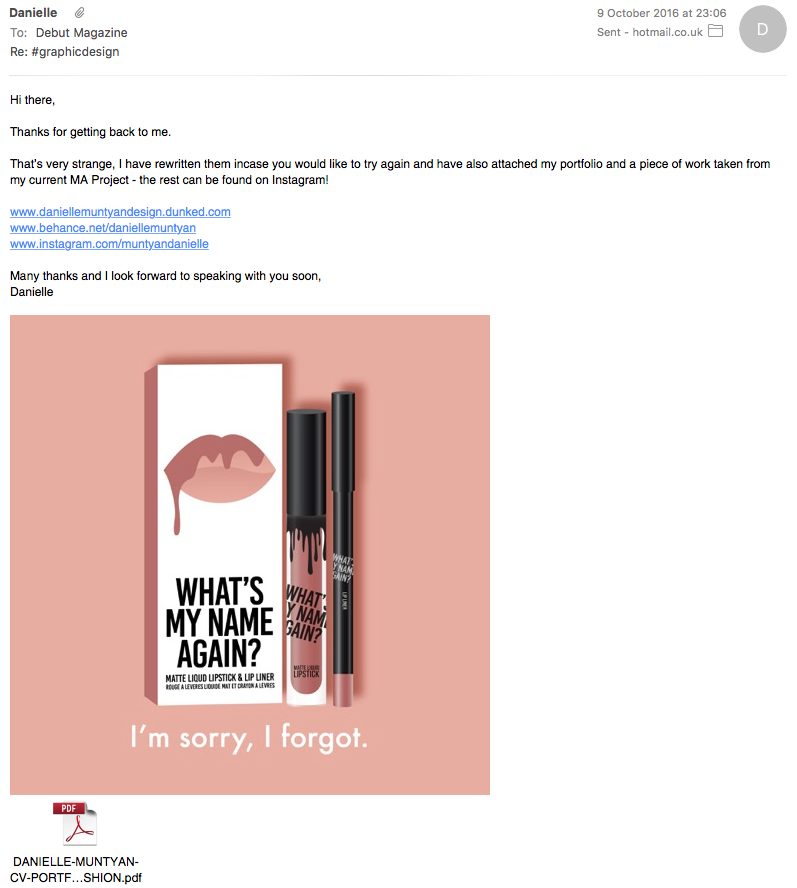
Even though I have in no way at all used a copyrighted design throughout the current project I am working on (Poster/Instagram/Tote Bags, etc), I felt as though I should look into Parody Law after this being highlighted whilst researching further into satire. I wanted to look at this to double check that my the work I am producing is fair in regards to the law incase any issues are ever raised as the main concept of this project is mocking Kylie Jenner and her brand, Kylie Cosmetics due to the effects on body image and self-perception caused on those followers and consumers of such a ‘brand conglomerate’ and ‘cultural icon’. The purpose of my work is to inform of this idea, not in anyway detract people from purchasing products, simply to educate and raise awareness of how easily it is for brands to do so. Furthermore, I have also worked on similar pieces of Instagram based work mocking brands such as Benefit, and feel the same in regards to that as noted above.

I feel it is great for creatives that the copyright law exists, and allows for creative license whether be a musician, a painter or a graphic designer for example. Parody has become a much more common way for creatives to work, especially commercially regarding pop-culture topics and trend based items/brands.

Further examples would be altered images of the Mona Lisa for example, or alterations of the Starbucks logo on t-shirts for example.

375263_1

screen-shot-2016-11-01-at-01-03-38

I feel it is important I know this information incase any issues arise whilst studying or in my future career should I work in this way again, or work with brands/clients whom wish to do so.

What is Parody Law?
“In its most general sense, a fair use is any copying of copyrighted material done for a limited and “transformative” purpose, such as to comment upon, criticize, or parody a copyrighted work. … In other words, fair use is a defense against a claim of copyright infringement.”

“On 1 October 2014, two new “fair dealing” exceptions were introduced, one of which allows use of a copyright work “for the purposes of caricature, parody or pastiche”. It has been suggested that the introduction of a parody exception will bring important cultural as well as economic benefits to the UK.” (MacKintosh, E. 2015)

Sources:
MacKintosh, E. (2015). The development of the parody exception to the copyright infringement. Available: http://www.fieldfisher.com/publications/2015/01/the-development-of-the-parody-exception-to-copyright-infringement. Last Accessed: 1st November 2016.
Stim, R.. (2010). What is Fair Use?. Available: http://fairuse.stanford.edu/overview/fair-use/what-is-fair-use/. Last Accessed: 28th November 2016.
TeePublic. (2016). Darth Vader Startars Coffee T-Shirt. Available: https://res.cloudinary.com/teepublic/image/private/s–5GSatQ_d–/t_Preview/b_rgb:191919,c_limit,f_jpg,h_630,q_90,w_630/v1450306331/production/designs/375263_1.jpg. Last accessed 1st November 2016.
TeePublic. (2016). Darth Vader Startars Coffee T-Shirt. Available: https://www.teepublic.com/t-shirt/375263-darth-vader-starwars-coffee. Last accessed 1st November 2016.

What is “Satire”?

This is working towards objective 4.A.

I wanted to look at the definition of Satire, and encompass what this is as the Instagram Post/Poster Brief, Zine and planned future projects encompass this as its main theme along with parody and sarcasm.

This was further highlighted upon finding the work of comedian Luisa Omielan, as discussed in previous posts and found that my work resonated with the definition shown below especially in regards to using “humour, irony, exaggeration, or ridicule to expose … topical issues” for example.

Upon further research, I found it interesting that Harold Rosenberg (1960) noted that humour is the oldest form of social study. In a way I feel as though I am working with “tongue-in-cheek” humour in order to study society at this moment in time, as well as to put my ideas out to the public/target audience.

Furthermore, the idea of using parody and humour without legal constriction came to mind whilst reading the below quote stating that “satire benefits not only of the protection to freedom of speech, but also to that to culture, and that to scientific and artistic production.” This led me on to look at Parody Law in relation to my own work which I will discuss on another blog post.

Definition (Oxford Dictionary):
“The use of humour, irony, exaggeration, or ridicule to expose and criticize people’s stupidity or vices, particularly in the context of contemporary politics and other topical issues.”

Harold Rosenberg, 1960:
The oldest form of social study is comedy… If the comedian, from Aristophanes to Joyce, does not solve sociology’s problem of “the participant observer”, he does demonstrate his objectivity by capturing behavior in its most intimate aspects yet in its widest typicality. Comic irony sets whole cultures side by side in a multiple exposure (e.g., Don Quixote, Ulysses), causing valuation to spring out of the recital of facts alone, in contrast to the hidden editorializing of tongue-in-cheek ideologists.

Other:

“For its nature and social role, satire has enjoyed in many societies a special freedom license to mock prominent individuals and institutions. In Germany, and Italy satire is protected by the constitution.

Since satire belongs to the realm of art and artistic expression, it benefits from broader lawfulness limits than mere freedom of information of journalistic kind. In some countries a specific “right to satire” is recognized and its limits go beyond the “right to report” of journalism and even the “right to criticize.” Satire benefits not only of the protection to freedom of speech, but also to that to culture, and that to scientific and artistic production.” (Wikipedia)

Sources:
Oxford Dictionary. (2016). Definition: Satire. Available: https://en.oxforddictionaries.com/definition/satire. Last Accessed: 30th October 2016.
Rosenberg, H. (1960), “Community, Values, Comedy”, Commentary, The American Jewish Committee, 30:155.
Wikipedia. (2016). Satire: Legal Status. Available: https://en.wikipedia.org/wiki/Satire. Last Accessed: 30th October 2016.

Terry Richardson Photography/Sam Roddick and the (Sexual) Objectification of Women/Male Gaze

This is working towards objective 1, 4.D.

Terry Richardson has always been seen as somewhat of a controversial Fashion Photographer, working with the worlds icons and elite in order to create sexually provocative and objectifying imagery of mainly women, which has become his trademark.

I wanted to look further into this after deciding to use some of his recent works in a developmental and experimental pieces of work – a satirical Kylie Jenner zine as discussed in my previous post – whilst noticing also how pivotal this is to the current industry of fashion and occasionally beauty, especially with adverts for items such as Shampoo and Fake tan. This is shown in the example of a St. Tropez advert featuring Kate Moss in a provocative, sexual pose, highlighting her breasts through the cut of dress, angle of photography, and also heightened further through the crop of the image making this along with her face, the most prominent and ‘appealing’ elements of this advert, sexually objectifying Kate.

st_tropez_kate_c9094

Image Source

Frederickson and Roberts (1998) noted in their writings, “Objectification Theory” that when “women are objectified, women as treated as bodies – and in particular, bodies that exist for the use and pleasure of others”. I feel as though this is represented in the small selection of photographs shown below of both Kylie Jenner and Kim Kardashian, as well as in the St. Tropez ad shown below which all portray women to be objects for the pleasure of men. The images below feature Kylie Jenner using her body and her figure as the key of the photoshoot, with all focus being on her breasts. Furthermore, the images of Kim Kardashian are playful and provocative, whilst sexually objectifying herself through the use of prop and pose choices, hinting at the idea of sex in a not so subtle way. I feel in the way that this shapes the idea of our self-perception and in-turn the perception of others, allows for sexual objectification to become the norm and to taint what we see as ‘ideal’, especially if one already feels vulnerable in the sense to complying to norms and fads to appeal as to what is seen as ‘attractive’.

Whilst this touches on Frederickson and Roberts (1998) theory of Objectification, this theory also coincides with the idea of the Male Gaze. Another theorist, Shields, noted that “[the] ‘male gaze’ transforms women into objects of the heterosexual man’s eye [74] … advertisements and other images of women are shot in such ways that encourage female audiences to adopt a certain perspective when looking at other women and themselves [77].”

I feel that this quote backs up the ideology of the Objectification theory, where women become objects to satisfy the male gaze. I feel through Fashion Photography such as the examples of Terry Richardson’s work, powerful photography in established, powerful magazines and campaigns, can truly impact upon one’s self-perception, and that of others also internalising these visuals and processing them as ‘the norm’.

kylie-jenner-3-600x800-1

Image Sourcerkmfhrczagnuhgqcvaqmbwynsvdpwq-1

Image Source

kim-kardashian-by-terry-richardson-shoot-2016-03

Image Source

kim-kardashian-by-terry-richardson-shoot-2016-04

Image Source

Furthermore, there have been Feminist perspectives discussed by Sam Roddick, a photographer, whose recent works also explore the idea of the ‘male gaze’. Roddick is not only a photographer, but also to the provocative lingerie store, Coco de Mer, which encompasses this as it’s selling point, knowing that women seek approval of males, whilst also in turn, sexually objectifying oneself as an ‘object’ for such pleasure.

A recent exhibition in 2015 titled Hidden Within, showcases her works inspired by work of the designer and architect Carlo Mollino whom throughout his lifetime collected polaroids of women which he kept at a house he didn’t live it. This obsession with women as objects, and in turn understanding how the control of the male gaze has affected such perceptions is important, as this itself is reflected through Roddick’s work.

Roddick noted that, “I came across Carlo Mollino when I opened Coco De Mer … there’s a lot of boring down days working in retail, you know, and that’s when my book collection in the shop was my sanctuary. I’d study his pictures and after a while, I realised the models weren’t posing as themselves; he’d posed them and he’d repeated the poses. Their hands were held in the same manner, flipped at the wrist and after a while you realised that he was sculpting them.”

Examples of Roddick’s work which recreate the sexually dark and controlling work of Mollino.

08_500x636 sophia-a-iv_500x749

Roddick continues to note that, “Terry Richardson is a wounded man. His sexuality is definitely wounded. There’s a sexual aggression in his pictures that’s obvious. From an artistic perspective I like his pictures, from a feminist perspective, he’s an arsehole. I think he wears his damage on his sleeve whereas I feel Carlo Mollino’s damage is way more hidden. When you look at his photos, they’re a lot more respectful than what you see today.” I found this comparison with Terry Richardson to be very interesting in the idea that due to an artistic approach from Mollino and Richardson there works can be said to fall in line with each other, however on a sexually derived level for the pleasure of a mass-audience of males, Richardson’s photographs put out a negative ideal of women to feminists, being more perversive, and objectifying opposed to empowering.

Sources:
Roddick, S. (2015). ‘FROM A FEMINIST PERSPECTIVE TERRY RICHARDSON IS AN ARSEHOLE’ SAM RODDICK ON HER NEW EXHBITION ABOUT THE MALE GAZE. Available: http://www.thedebrief.co.uk/news/opinion/from-a-feminist-perspective-terry-richardson-is-an-arsehole-sam-roddick-on-her-new-exhbition-about-the-male-gaze-20150337965. Last accessed 15th November 2016.
Fredrickson, B & Roberts, T (1998). Objectification Theory. Psychology of Women, 22: Printed in the United States of America. 173-176.
Klein, K. (2013). Why Don’t I Look Like Her? The Impact of Social Media on Female Body Image. Available: http://scholarship.claremont.edu/cgi/viewcontent.cgi?article=1749&context=cmc_theses. Last accessed 12th November 2016.


Professional Context 1 Presentation: Formative Feedback

Today I delivered my first presentation for the Professional Context Module. I chose speak about my Professional Practice within context of my Research Question for this first presentation.

In general I received positive feedback regarding the content I had presented, with some constructive criticism to note going forward in regards to finalising this presentation, the upcoming Theoretical presentation, and the report which I am yet to deliver. I also found that my presentation sparked several ideas from tutors and colleagues in regards to further research references in relation to my practice and research question.

  • Time Keeping: I was over the 5 minute limit delivering my presentation and feel this is due to the amount of content I had written to relay in that time. I had pre-empted that I may of written too much, and feel is due to not being selective enough in what I may of said – I was told I had delivered the ‘breadth’ and now should focus on the ‘depth’. I will note this going forward when revising my presentation prior to submission, whilst taking this feedback on board in advance of the second presentation in a few weeks time. Looking back, I feel as though the way in which I wrote my presentation was perhaps written to much in a ‘formal’ style I am used to, and perhaps could of noted some points on the presentation itself, opposed to feeling the need to relay everything verbally.
  • Ethics: This was noted by tutors during the formative feedback, and was directed to the Ethics Policy the College has in place in regards to warning the viewers on sensitive issues, and how going forward during my research I will ensure Data Protection and Confidentiality for example are thoroughly looked at and embedded in my practice. The ethics I noted during my presentation, and as discussed after regarding working with underweight models caused my own responsibilities and ethics as a designer to come into conversation, especially focusing on the moral issues I face via working in the industry without damaging my reputation, brand or business as a designer and without constricting my audience, whilst staying true to what I believe in. Going forward I will focus on using the Ethics Policy firmly when carrying out any further ‘sensitive’ presentations, showcasing content or conducting research with the public for example. I have downloaded the Ethics Policy and have began reading through and taking in the points and policies which are relevant to my current practice especially in regards to planning my research trip to Japan.
  • Cross-Cultural Understanding and Japan Trip: Noted a positive that I am going to Japan myself to conduct research, but as only going for a week was told to plan an itinerary accordingly, and get in touch with people now in regards to whom I am going to visit making them aware of my research project, and what I am looking to achieve and how I will this information accordingly (ethics, data protection and confidentiality). I was told also to have a contingency plan incase I do not gain the information I am seeking whilst I am there. It was also noted to look for Japanese Institutions for example in the UK, which work with people of the same target audience to that I am seeking. If anything this may add a different dimension to this part of my research project in order to see the differences between Japanese people who live in their native country, oppose to those whom live in the UK.
  • Looking at the Communication Theory was also noted in context to my field as a Graphic Designer/Digital Illustrator.

Now having seen all of my colleagues’ presentations, I feel it is very interesting how diverse a group of practitioners we are in regards to our methods used, however have similar thought processes and underpinning theories or ideas which make us all connect in some way, whether this be relevant contemporary or traditional artists for example, such as Barbara Kruger which was also references in regards to several other interdisciplinary practices.

I also found it touching how many had related their current practice back to a previous or even current personal experience. I found also that these colleagues would be good to work with potentially in the future on a collaboration, or even if simply for interdisciplinary discussion and idea building.

It also came to mind that many are conscious of ethical issues in their own and surrounding practices, and how this reflects on their own work as well as how it is perceived. Cross-cultural issues were also raised along with colleagues also looking at the contrasts between the East and West in context of the positioning, inspiration or audience of their work which I resonated with in regards to my practice.

I found these sessions very informative and inspiring in regards to collaboration, discussion and research and feel I can also really learn and develop my own practice through working with such an eclectic, diverse and interdisciplinary group of practitioners.