Instagram: Social Media Statistics/Contextual Information

This is working towards objective 4.B and 1.

Below shows a range of sourced quantitative data supporting the current exploratory project of my practice, a wellbeing campaign relative to social media use. I feel that the below facts, figures and information support how the use of Instagram in particular in relation to my research topic, and resolving the brief.

I believe also that this information really shows how popular Instagram is by not only the user, but the brand or icon for example initially sharing the content, shaping my practical work and concepts to date.

screen-shot-2016-11-06-at-20-18-38

Source
screen-shot-2016-11-06-at-20-22-55

screen-shot-2016-11-06-at-20-23-02

Source

screen-shot-2016-11-06-at-20-22-32

screen-shot-2016-11-06-at-20-22-12

Source

screen-shot-2016-11-06-at-22-27-28

screen-shot-2016-11-06-at-22-27-21
Source

0740e31a3b5266d0dcbd2d1d05431f5e

1e97eed2b226c1d17e066dc8480472bf

The above two images have been taken from my ‘well-being campaign’ Pinterest board which can be found, here.

Other facts (source):

Over 40 billion photos have been shared

Instagram clocks up 3.5 billion likes every day

On an average day, 80 million photos are shared

Instagram usage has doubled in the last two years

Selena Gomez has the most amount of followers, with 69.5m

A photo of Kendall Jenner is the most popular ever, with 3.5 million likes

One study found that 8% of accounts are fake

The same study showed 29.9% of accounts are ‘inactive’, posting one or fewer photos or videos in a month


48.8% of brands are on Instagram. By 2017, this is predicted to rise to 70.7%

If we only look at the top 100 brands in the world, 90% have an Instagram account

96% of US fashion brands are on Instagram

Outside China, almost 50% of Instagram users conduct product research on social media

Engagement with brands on Instagram is 10 times higher than Facebook, 54 times higher than Pinterest, and 84 times higher than Twitter

Over a third of Instagram users have used their mobile to purchase a product online– making them 70% more likely to do so than non-users

32% of US teens list Instagram as their most important social network, more than any other social network

50% of Instagrammers follow brands, making them the social networkers who are most likely to do so

Posts that include another handle gain 56% more engagement

Posts with at least one hashtag gain 12.6% more engagement

And posts with a location receive 79% more engagement

Photos see more engagement than videos on Instagram

The average engagement per post has grown by 416% compared to two years ago

70% of the most used hashtags are branded

Photography has changed massively over the years. A couple of bonus stats attest to that: more pictures are now taken every two minutes than were taken during the entire 1800s.

It is also estimated that ten percent of all photos ever taken were snapped in the last twelve months. It seems our appetite for photography shows no signs of slowing down. These Instagram stats demonstrate how important this trend is for marketers hoping to reach their audience.

Social Media Wellbeing Campaign: Initial Thoughts, Ideas and Planning

This is working towards objective 4.B. and 1.

well-being-campaign

Above shows my initial thoughts and ideas to kick start the Social Media Well-being Campaign project. The execution is still in the idea process, which I am also looking into more via research to see whether this project would be better suited to print based outcomes, digital outcomes, or a combination of both.

The above will act as an initial starting point for planning and research.

well-being-campaign-plan

Above also shows my initial project plan looking at time management and how I will break this down over the next few weeks. This will help me plan individual tasks on a daily basis.

Communication Theory: AIDA Model

This is working towards objective 1.

Whilst researching the Shannon-Weaver Communication Model, I came across the AIDA Model which I feel may be more relevant contextually to my working research question and practice.

“The phrase AIDA, in marketing communication was coined by American advertising and sales pioneer Elias. St. Elmo Lewis in the late 1800s. The model talks about the different phases through which a consumer goes before going to buy a product or service.” This can be seen in present day through the use of marketing and design-led strategies within the consumer industry, such as the fashion and beauty industries in relation to my practice, especially in regards to social media and magazine advertising.

AIDA, an acronym, stands for the following: Attention, Interest, Desire and Action. It is said that these are the four stages which a consumer will pass through whilst engaging with a piece of communication. Lewis notes that the primary purpose of advertising is to capture the consumers attention, spark interest on the product at hand building up a desire to own such product, leading to action in the way of a purchase. However, this is also applicable to magazines for instance and the ad campaigns filling the pages, or the cover alone for example, attracting the consumer through a headline or cover model, gaining interest through the copywriting and content leading for a desirable product to purchase leading to further content and advertisements inside triggering the same process, allowing for more actions to be taken, and more products to be purchased. This can also be looked at from the point of social media as recently researched and worked on throughly Instagram project. By uploading images this can cause attention and interest from followers or communities, leading to a desire to buy into a new product, or change ones appearance for example, leading to an end-action as a result of the initial ‘image’ or ‘advert’.

The AIDA Model is something which I would like to consider for my Social Media Wellbeing Campaign project which I am hoping to begin experimenting with this week, in order to create effective ideas for an advertising campaign.

This process has been summarised below (source):

  • Attention: Attention is usually grabbed by the use of image, color, layout, typography, size, celebrity, model etc
  • Interest: Once attention is grabbed, it’s necessary to create interest in the viewers mind so that they will read more about the brand being advertised. By the use of an attractive sub head, interest can be invoked
  • Desire: The element of desire is usually created by the use of body copy where you write in detail about the necessity of buying the brand, thereby explaining the features of the brand, facts and figures
  • Action: Towards the end, the contact information of the brand will be given where they expect the viewers to take action. It can be in the form of shop address or website address for example.

An example has also been taken from the Communication Theory website to show how this often works in direct relation to a visual in an advertising campaign context, opposed to in a social media context as also discussed above.


The acronym AIDA stands for Attention, Interest, Desire and Action. These are the four stages that a consumer goes through when watching or viewing an advertisement.


This can also be seen in a campaign spread taken from Vogue Magazine (source):

  • Attention: Photograph
  • Interest: Headline
  • Desire: Subhead
  • Action: Product Names, Prices and Contact (store/website)

212395_980

Source:
Unknown. (2014). AIDA Model. Available: http://communicationtheory.org/aida-model/. Last accessed 6th November 2016.
Vogue Magazine. (2011). Image. Available: https://aidasview.files.wordpress.com/2011/10/212395_980.jpg. Last accessed 6th November 2016.

Communication Theory: Shannon-Weaver Model and Wilburr Schramm

This is working towards objective 1.

As a Graphic Designer, I feel researching into Shannon and Weavers Communication Theory model, will allow for myself to understand my practice better, in regards to how the end-user receives the message which I, the sender, am putting out there for public engagement, feedback and communication of a message or idea.

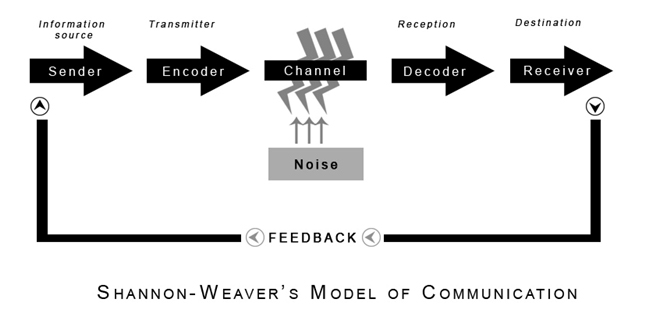
The Shannon-Weaver model suggests that the Communication Theory has (taken from source):

  • “Sender :  The originator of message or the information source selects desire message
  • Encoder : The transmitter which converts the message into signals
  • Note: The sender’s messages converted into signals like waves or Binary data which is compactable to transmit the messages through cables or satellites. For example: In telephone the voice is converted into wave signals and it transmits through cables
  • Decoder : The reception place of the signal which converts signals into message. A reverse process of encode
  • Note : The receiver converts those binary data or waves into message which is comfortable and understandable for receiver. Otherwise receiver can’t receive the exact message and it will affect the effective communication between sender and receiver
  • Receiver : The destination of the message from sender
  • Note : Based on the decoded message the receiver gives their feed back to sender. If the message distracted by noise it will affect the communication flow between sender and receiver
  • Noise:  The messages are transferred from encoder to decoder through channel. During this process the messages may distracted or affected by physical noise like horn sounds, thunder and crowd noise or encoded signals may distract in the channel during the transmission process which affect the communication flow or the receiver may not receive the correct message
  • Note : The model is clearly deals with external noises only which affect the messages or signals from external sources. For example: If there is any problems occur in network which directly affect the mobile phone communication or distract the messages”

However, even though this model accounts for ‘noise, or interference’ this can often represent a confused or distorted message which the receiver may not understand, therefore missing a key step of ‘feedback’. This was accounted for by theorist, Wilbur Schramm, whom focused on this additional stage in regards to allowing for overcoming barriers of effective communication. Schramm noted that “to understand human communication process, one must understand how people relate to each other” through communicating a message.

The modifications to this theory developed as shown below:

  1. “Added to the model the context of the relationship, and how that relationship will affect Communicator A and Communicator B.”
  2. “Included the social environment in the model, noting that it will influence the frame of reference of both Communicator A and B.”

Thoughts:

I do feel that this theory is relevant in regards to my practice and the work carried out recently for my Instagram post project, in sense of having a sender, encoding a message, decoding and receiving a message, however feel that this theory applies more to verbal channels of communication, opposed to visual in the sense that this model allows for a continuous loop of discourse to take place between two people. I would like to look further into other communication theories which may apply to my practice more on a visual level.

Sources:
Unknown. (2015). Shannon and Weaver Model. Available: http://communicationtheory.org/wp-content/uploads/2011/06/shannon_weaver_model.jpg. Last Accessed: 6th November 2016.
Praccreditation. (Unknown.). Communication Models. Available: http://www.praccreditation.org/resources/documents/APRSG-Comm-Models.pdf. Last Accessed: 6th November 2016.

Self-Perception Theory: Daryl Bem

This is working towards objective 1.
 
“©Dove conducts a social experiment exploring women’s view of their own beauty in contrast to what others’ see in them. A promotional piece for Dove, it exemplifies how we are, indeed, more beautiful than we think.”
“Men are not their own worst beauty critics. Only 4% of men around the world consider themselves average looking. At New Feelings Time, we are committed to creating a world where illegitimate beauty is not a source of confidence. So, we decided to conduct a compelling social experiment that explores how men view their own beauty in contrast to what others see.”
I came across these videos whilst researching the theory of Self-Perception as profoundly noted by Daryl Bem in 1972. Both are social experiments, the first being by Dove, a brand owned by Unilever, and the second by New Feelings Time, and both aim to showcase how Women, and Men perceive themselves in relation to others.

I found the first one interesting in how honest the women were in stating how they truly felt about their facial appearance, especially in relation to when they analysed each others faces for portraits, whereby they seemed shocked by how beautiful they were actually seen as.

The second video, showcases men whom describe themselves again honestly. Half used references from other peoples opinions of themselves, for example their Mothers, whilst others stated how they themselves feel. I was however surprised by the brutally honestly of the women describing the women at the end of the video describing a man. This seem to raise opinion with the men on how they were portrayed in and how they feel, with one claiming, “that does not look like me, and I refuse to believe it” giving the impression that in contrast to the female experiment whereby all were pleased with their portraits, men perhaps are not as aware of their self-perception.

As my research question focuses on the idea of self-perception within the fashion and beauty industries, I feel looking into this theory is key to successful practical projects, as well as academic research.

The below extracts summarise the theory whilst proving relevance to my research question and recent research topics of social media for example, whereby this can socially influence our behaviours and beliefs. Furthermore, I also found the statement, “we are what we do” resonant with the idea of ‘cultural icons’ and beauty bloggers, for example, in the sense that how they portray themselves through digitally curated galleries on Instagram, shapes that person, builds an image and a persona, being fully aware of their self-perception and self-awareness. But how does this affect the followers and their self-perception? Does this allow for us to change our identities in order to fit in and therefore become aware of our own self-perception once again?

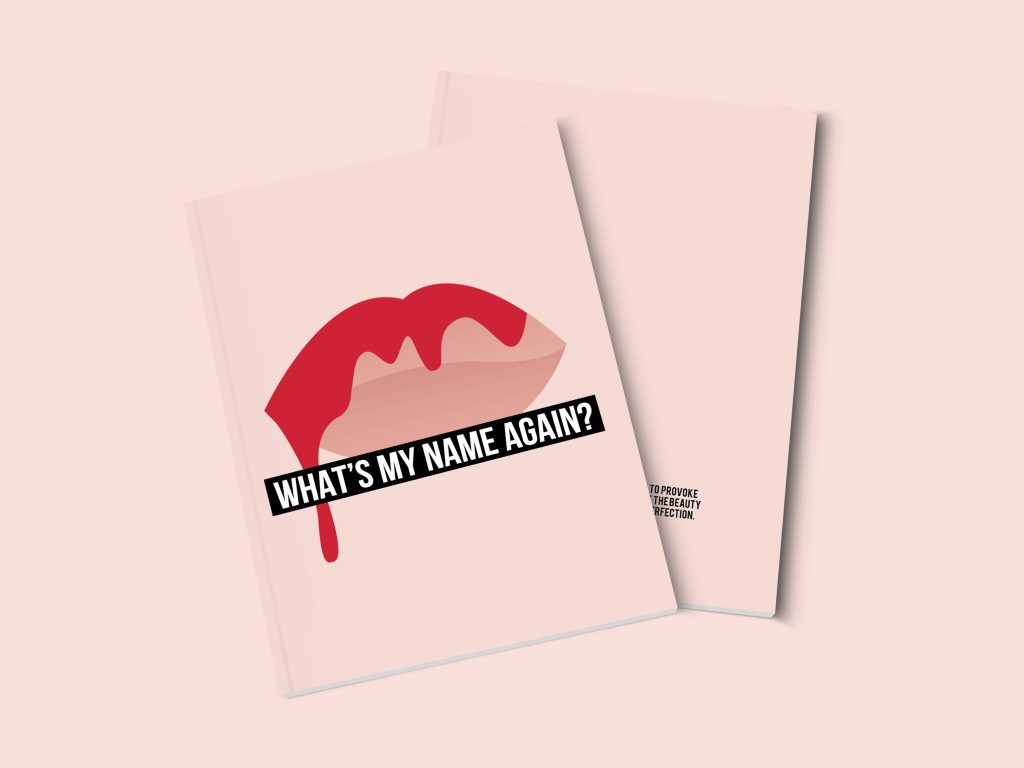
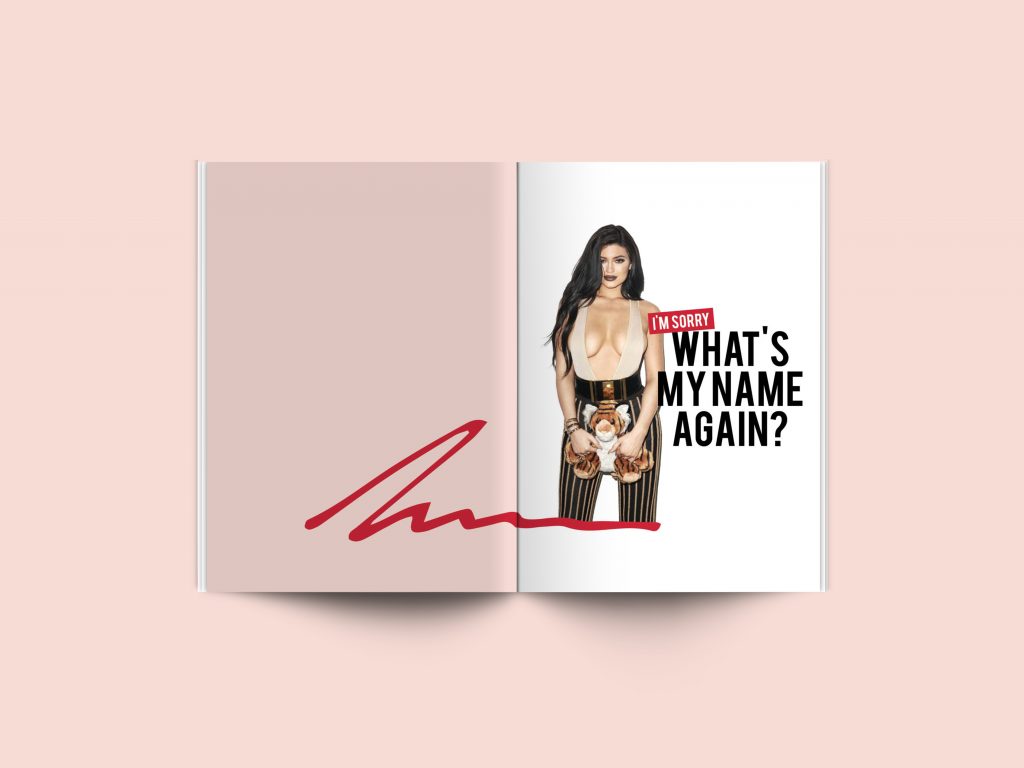
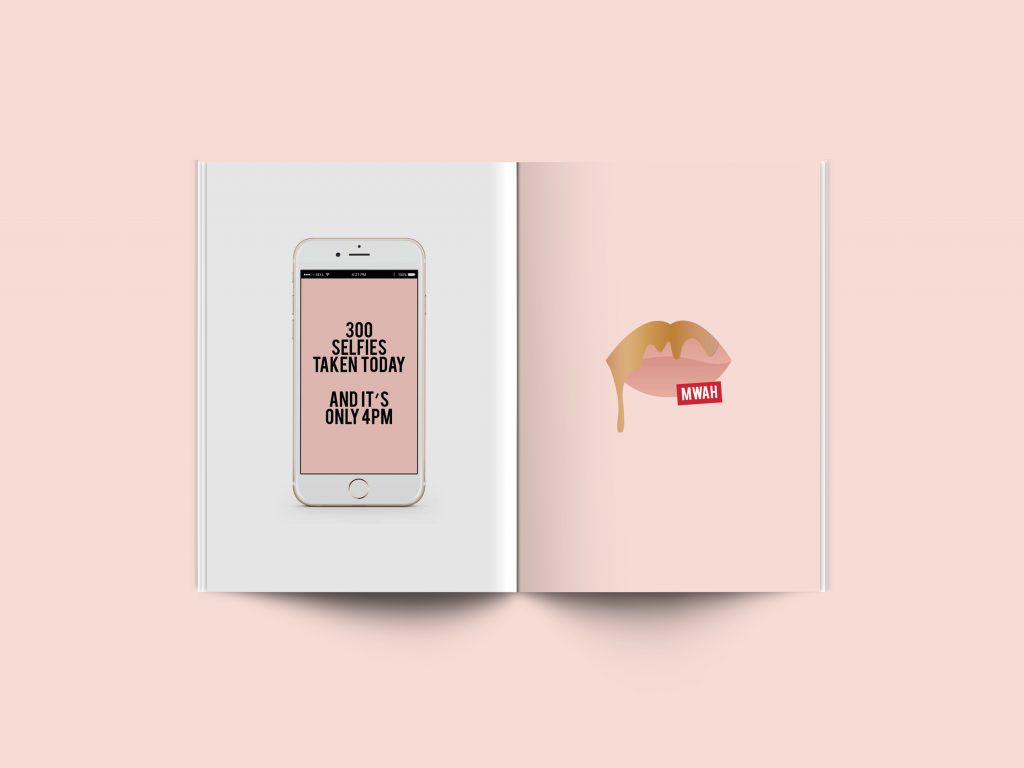
I feel that this is heavily resonant with the Instagram/poster/zine project which has recently been experimented with, exploring this idea in relation with the theory of Identity for example, and changing to conform with an ideal such as Kylie Jenner. This form of marketing strategy, shapes our identity and perception due to being counterintuitive feeding off the actions of others in our individual ways to conform with this built sense of ideal.

Summary

“Self-perception theory describes the process in which people, lacking initial attitudes or emotional responses, develop them by observing their own behavior and coming to conclusions as to what attitudes must have driven that behaviour.”

Self-Perception Theory

“Self-perception theory is counterintuitive. Common knowledge would have us assume that a person’s personality and attitudes drive their actions; however, self-perception theory shows that this is not always the case. In simple terms, it illustrates that “we are what we do.” According to self-perception theory, we interpret our own actions the way we interpret others’ actions, and our actions are often socially influenced and not produced out of our own free will, as we might expect[1].”

screen-shot-2016-11-13-at-15-26-08

Image Source

screen-shot-2016-11-13-at-15-26-18

Image Source

Furthermore, since whilst researching for my 2nd Professional Context presentation, came across these two images, one of Kim Kardashian, and one of Makeup Artist/Instagram Icon, Amreezy, whom are practically holding the same pose – has social media affected our self-perception into allowing us to feel it is okay to perceive ourselves or see ourselves in a similar way to others to attain followers and likes?

Sources:

Unknown. (2016). Self-Perception Theory (Bem). Available: https://www.learning-theories.com/self-perception-theory-bem.html. Last Accessed: 5th November 2016.
[1] Bem, D. J. (1972). Self-perception theory. Advances in experimental social psychology6, 1-62.
Dove. (2013).
Forensic Artist Capture’s Women’s Self-Perception. Available: https://www.youtube.com/watch?v=sPZ0N4HdYYA. Last Accessed: 5th November 2016.
Dove. (2013). Dove Real Beauty SketchesAvailable: https://www.youtube.com/watch?v=YBoyf9HWiDQ. Last Accessed: 5th November 2016.

Collaboration with Scarlett Carson: Commercial Photography

I have confirmed this week a collaboration with a fellow MA student Scarlett Carson, a Commercial Photographer. I feel this collaboration is very important to my practice, with Graphic Design, Fashion and Commercial Photography being extremely relative, whilst the topic of my studies resonates with Scarletts interests and practice also.

Our idea is around Identity and Standardisation within the Fashion and Beauty Industries. Specifically for this photoshoot and project, we are wanting to use shop mannequins, masks and props to represent the concept of plastic surgery and the strive for perfection, and then showcase this as an editorial or campaign led project.

We are both currently in the process of sourcing props for the shoot, and plan on booking a Photography studio in next few weeks to start experimenting with this idea in the studio. Scarlett has been sourcing mannequins, whilst I have been looking for smaller props such as False Nails to complement the idea, enhance the concept and sharpen the boundaries between ‘real’ and ‘fake’ ‘perfect’ bodies.

London Trip Booked: 7th – 8th January 2017

This is working towards objective 1, 2, 3 and 5.

As noted in previous posts, I have been speaking with a well-known model, whom I cannot name for confidentiality reasons, regarding an interview, whilst also speaking with my connection at It’s Milk and Honey (a recent freelance project of mine) regarding an interview.

I have already noted that with my ‘model’ contact, I wish to discuss how working in industry, both fashion and beauty, affect ones self-perception. I am interested to see how this compares to those whom view such models in the media on a daily basis.

In regards to It’s Milk and Honey, I wish to speak with my contact regarding their work as an online group of female bloggers, how they feel they are targeting the issues of fashion, beauty, body image and self-perception, and how in turn they are empowering women.

Prior to carrying out this trip, I plan on sending out consent/confidentiality forms and a full introduction clarifying what questions will be asked to alleviate any problems prior to interview. I will also note that pseudonyms will be used if desired to protect their identities and confirm with the Ethics Policy provided by the College. This will ensure that the interviewee is aware of what the research is being carried out for, in which ways it will be used and what I aim to take from it.

I am currently waiting for ASOS to reply to my emails regarding visiting them also for an interview regarding their Model Welfare Policy. I hopefully plan on tying in an interview during this time in London if possible, and the above will also be applied to further interviews such as this, whether in person or online to ensure fair practice and ethical research practice.

“How to be a Beauty Blogger” Zine Idea

This is working towards objective 4.D.

Following the development of the Kylie Jenner zine, and whilst going back through my notes on initial ideas for the project, I had noted a “how to be a beauty blogger” zine, which I wanted to explore also.

However, once I began to create this satirical, typographic zine, I realised that further visuals are needed to bring this to life, and decided whilst also beginning to work on the Social Media Wellbeing Campaign, to put this zine on hold, and have discussed a potential collaboration with Bobbi, a fellow MA student, whom is an Interdisciplinary artist, focusing on illustration and ceramics. I feel her style of humorous and tongue-in-cheek illustration would really help bring this to life whilst adding a different aesthetic to the organically developed style of the zine.

how-to-be-a-beauty-blogger-zine2

how-to-be-a-beauty-blogger-zine3

how-to-be-a-beauty-blogger-zine4

how-to-be-a-beauty-blogger-zine5

how-to-be-a-beauty-blogger-zine6

how-to-be-a-beauty-blogger-zine7

how-to-be-a-beauty-blogger-zine8

how-to-be-a-beauty-blogger-zine9

how-to-be-a-beauty-blogger-zine10

how-to-be-a-beauty-blogger-zine11

Contemporary Artists: Anna Potter AKA Top Girl Studio

I came across the work of Anna Potter, AKA Top Girl Studio whilst looking at Designers whom use Instagram as a platform of self-promotion and as a gallery for their work.

I came cross Top Girl Studio, a Graphic Design graduate from Central St. Martins, whom targets celebrity culture through her work in a very satirical and graphic manner, which I found resonant in regards to my work and my current practice, in particular the concept behind the work and the visual aesthetics used.

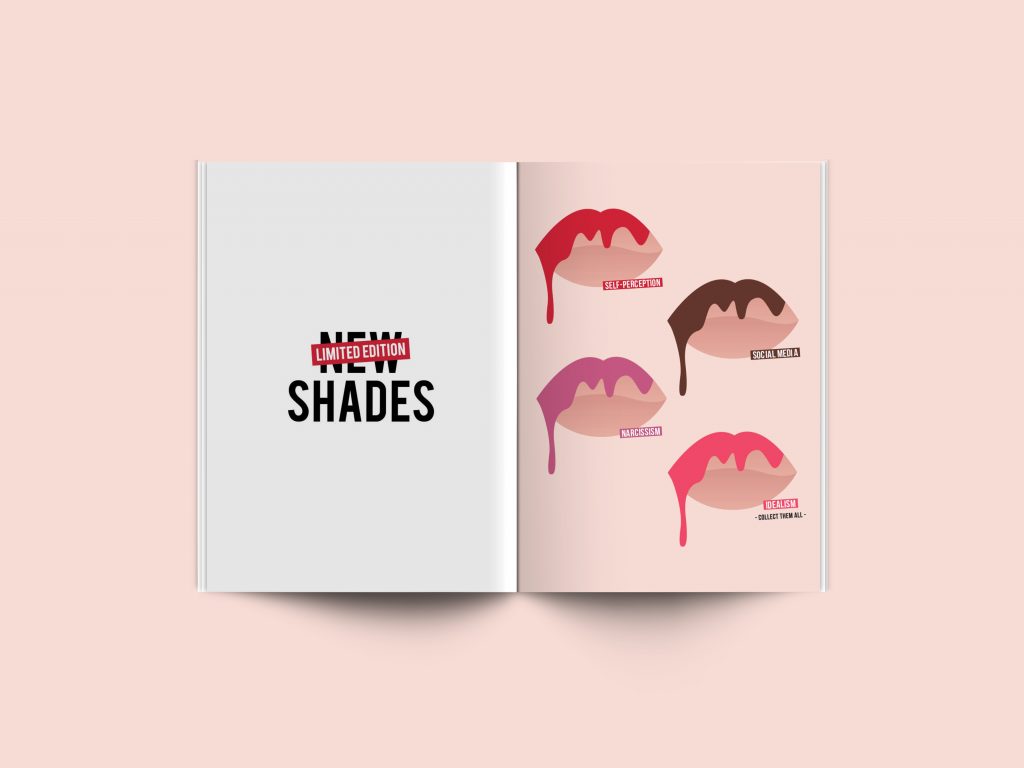
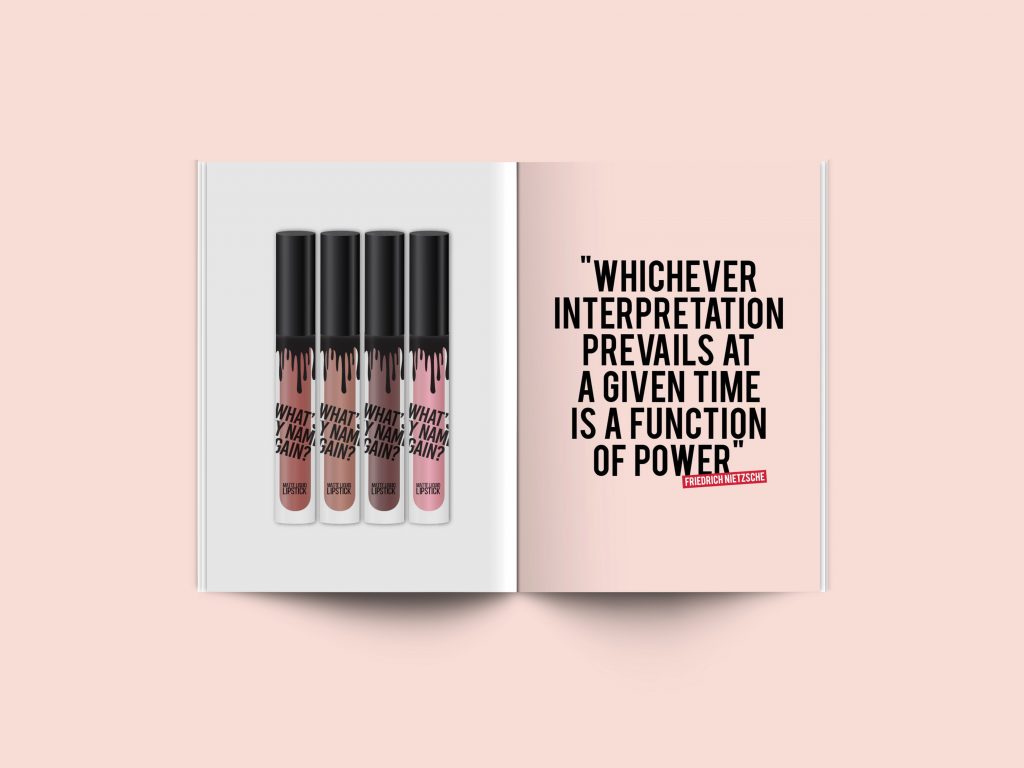
For example, the first screen shot below showcases a project with a ‘user guide’ relating patterns to issues such as “poverty” which are then relative to the art work. I found this very similar to the idea I have been working with in regards to lipstick shades, each standing as a theory, for example I have been using a Red Lipstick shade for Self-Perception, Purple for Narcissism and Gold for Cultural Icon. Furthermore, in regards to the style of work used for Anna’s booklets/zines I also find the use of pink very prominent alike in my work, utilising the feminine aspects of the beauty and fashion industries as a key to draw in attention. In addition, the work shown on Top Girl’s website is all relevant to the Fashion industry, Music artists and Celebrity culture, drawing on similar topics also, i.e. social media careers and how competitive, yet, ‘not real’ this can be.

I’m really glad to of found a current practitioner whom is also female, of similar age, works in a similar way, with similar aesthetics and also works with similar ideas, theories and concepts.

Going forward I would like to find other similar designers, artists and photographers for example, and would like to contact Anna in the future to see if she would be keen for a collaboration of some sort which could benefit both of our current and future practices, whilst joining forces as a team whom work in the same way and share similar beliefs, I feel would only add to the relevance and currentness of my MA studies and research question alone, whilst benefiting myself via collaborating Nationally and sharing ideas.

I find this work really inspiring and more so, extremely relevant to my current research, practice and ideas.

screen-shot-2016-11-03-at-13-36-17

screen-shot-2016-11-03-at-13-36-45

screen-shot-2016-11-03-at-13-37-14

Image Source